2019年6月14日 星期五

81歲美國業餘發明家 Marshall Medoff

The inventor turning plant life into biofuel

Marshall Medoff's innovative method of turning pland life into fuel and other useful products. 

Source:  https://www.cbsnews.com/video/marshall-medoff-the-unlikely-eccentric-inventor-turning-inedible-plant-life-into-fuel-60-minutes


https://www.xyleco.com/board


Walden pond
華登湖冥想業餘發明家 Medoff      

2019年5月21日 星期二

博主63歲開始學習社會工作專業

1977年我由浸會學院經濟系轉往社會學系, 放棄了學習社會工作專業, (社會學和社會工作四年學習期其中首二年學習科目相同, 第三年才開始分道揚).  今後有生之年爭取機會重投社會工作行列, 為社會失落階層增添幸福感. 

2019年5月18日 星期六

The sounds of Inuit throat singer Tanya Tagaq (60 minutes)


博主解說: 日不沒國-英國除了紐西蘭是尊重土著文化外, 其餘殖民地會一概殺當地傳統文化.

Source: https://www.cbsnews.com/news/the-sounds-of-inuit-throat-singer-tanya-tagaq-60-minutes-2019-05-05

The sounds of Inuit throat singer Tanya Tagaq

"It's not for everybody," Tagaq says, but her unique music, a blend of an ancient art form with elements of punk rock, heavy metal and electronica, has been called "transfixing" by Rolling Stone

Chances are you won't be hearing Tanya Tagaq's music at your next dinner party or wafting over the speakers at the mall. She is technically a pop star, but not in the same vein as, say, her fellow Canadians Drake or Arcade Fire, both of whom Tagaq recently beat out to win the country's most prestigious music prize. Hailing from Nunavut, a territory above the Arctic circle, Tagaq is an Inuit throat singer, keeper of an ancient art form that stretches the limits of the human larynx. She has brought this traditional sound screeching onto the modern scene by layering it with elements of punk rock, heavy metal and electronica. Rolling Stone called her music transfixing. We'd never heard anything quite like it before and so it is we say: now, for something completely different.
Tanya Tagaq begins every performance by closing her eyes - as she puts it, shutting out the visual and plugging into the sound.
Her voice flickers, then builds to a rhythmic panting.
Then comes the inevitable moment when the mounting tension uncoils and she unleashes a sonic storm. If this is not what you were expecting Inuit throat singing to look or sound like, stick with us here.


tanya-tagaq-11.jpg
Tanya Tagaq
Her music is improvised. There is no set plan, no set list. Often, there are no shoes. At 5-foot-1-inch, Tagaq generates a mighty sound, especially for a diminutive person and she'll be the first to tell you it's not easy listening.
Jon Wertheim: You give people a warning sometimes?
Tanya Tagaq: Yeah. Because I feel like it should be consensual. Like you shouldn't have to sit there and suffer through it if you don't like it, because it's not for everybody.
Jon Wertheim: You tell people "if you don't like it, hey?"
Tanya Tagaq: I'll point out the exits like on an airplane.
Jon Wertheim: You're like a flight attendant.
Tanya Tagaq: There are four exits. And then I tell them, it's ok to leave. Like I'm not gonna be insulted.
Those who stay in their seats are bathed in a mash up of Inuit tradition and contemporary experiment. And, as Tagaq told us over lunch before a concert in New York, no two shows are alike.
Jon Wertheim: A good show means what to you?
Tanya Tagaq: When it's effortless in the fact that I feel like I'm a fish on the end of a hook, I'm just being reeled in.
Jon Wertheim: What's reeling you in?
Tanya Tagaq: The music. I get kind of hypnotized by it. And it just becomes its own creature.


tanya-tagaq-8.jpg
Tagaq with correspondent Jon Wertheim
To make sense of all this sound, to understand Tanya Tagaq and her music, you have to go to the source. So we headed north. Four flights and 2,300 miles from New York, we landed on a gravel runway in Nunavut, Canada's northernmost and largest territory, ancestral home of the Inuit, Indigenous people of the North. Nunavut, literally "our land" in the native Inuktitut language, is made up of 800,000 square miles of the Canadian Arctic, roughly three times the size of Texas. The landscape calls to mind the setting for an extraterrestrial sci-fi movie. And then there is the lighting.
It might not look like it, but it's now midnight here inside the perimeter of the Arctic Circle. In summer, months can go by without a sunset. Of course, that means that in winter, months can elapse in total darkness. By then it's often so cold that Fahrenheit and Celsius converge at -40 degrees.
Which is why we visited in July. Tagaq's touring schedule keeps her based in Toronto; but every summer, she comes back to the family cabin in her hometown of Cambridge Bay, population 1,700.


Tagaq and her older brother Carson took us out on the tundra — more of a lunar scene than a polar one, though we did manage to find a patch of ice.
We rode for hours along the shores of the Arctic Ocean, to a favorite fishing spot.
Tanya Tagaq: It never gets old. You're free. You're living with the land. You're living with the animals.
The land, the sea, the animals, they all take turns playing Tagaq's muse. And in summer, the rhythm of her life here is set by runs of Arctic Char.
Tanya Tagaq: My heart's beating fast. I want to eat one. Darn, where'd they go? Come on.
Jon Wertheim: and Tanya Tagaq: I can't believe we don't have a fish. Cause once you have fresh arctic char, you're addicted.
Back at the family cabin, Tagaq's father and her daughter had more success with nets.
Jon Wertheim: You got dinner.
Tanya Tagaq: Yeah. Are you gonna try it? You don't have to.
Jon Wertheim: I'll do it.
Tanya Tagaq: Cheers!
Jon Wertheim: That's fresh fish.
Tanya Tagaq: Mmmmmmm.


fullepisode.jpg
Nunavut is home to 40,000 Inuit, or Inuk people. They have lived off the land and the sea here since migrating east from across the Bering Strait, 1,000 years ago.
Inuit throat singing, that sound we came all this way to hear, can be traced back just as far.
Tanya and her friend Donna Lyall demonstrated the traditional form for us. Conceived in an igloo while the men were out hunting, it's really a friendly competition between two women, akin to a musical staring contest.
Tanya Tagaq: There's a leader and a follower. And you have to be able to mimic the sound a split second after the first person does it.
Both partners make short inhalations and exhalations that vibrate over the top of their windpipes.
Tanya Tagaq: You're basically trying to mess up the other person.
Tanya Tagaq: (Laugh) I lost. I lost that round! Isn't this awesome?
All the more awesome when you consider that throat singing was all but banned here in recent decades, along with many Inuit traditions and the native language.
Tanya Tagaq: It was part of the colonial process. Children were forbidden from speaking their language, or exercising their culture in any way whatsoever. And they told us our belief system was wrong.
Canada has a long history of mistreating Indigenous people. In one of the worst chapters, from the mid-19th century until the mid-90s, the government separated thousands of Inuit children from their parents and placed them in church-run schools as a way to assimilate them. Tanya herself went to a residential school five hundred miles from home, 25 years ago.
Jon Wertheim: What was that experience like?
Tanya Tagaq:  It was a bit like jail where every single one of our minutes were accounted for. You know, so we were very tightly controlled. But it was like a boarding school by the time I went. But previous generations had it much, much harder. Most of them were sexually abused, beaten.
Jon Wertheim: This is a really shameful stain in Canadian history, isn't it?
Tanya Tagaq: It's absolutely horrific.
Jon Wertheim: This anger, this despair, this is what I'm hearing in some of your songs.
Tanya Tagaq: Absolutely. I live with a broken heart thinking about our history.
The Canadian government apologized ten years ago for its policy of forced assimilation, but the country is still reckoning with generational trauma.
Tagaq's concerts serve as acts of resistance against the Canadian government and also celebrations of Inuit culture.
And the music has found global appeal. She's on perpetual tour of the world's concert halls. Her albums earn the kind of critical acclaim that would make most mainstream pop acts, well, scream.
But Tagaq told us she discovered throat singing quite by accident. Because the music was taboo for so long, her introduction came when she was away at college and feeling homesick. Tagaq's mother, born and raised in an igloo, found some tape recordings of the traditional sound and mailed them to her.
Jon Wertheim: What are you hearing on these tapes that resonated with you?
Tanya Tagaq: I could hear the land. It was incredible for me to be able to taste my home again in my ears.
Jon Wertheim: Well, you didn't just taste it in your ears, you tried to practice yourself.
Tanya Tagaq:  For years, I was just throat singing in the shower. I was trying to do both of the voices.
Jon Wertheim: The call and response.
Tanya Tagaq:  Uh-huh.
Then one night, she found herself casually throat singing for a few friends around a campfire at an arts festival in Nunavut. The festival director heard her and asked if she'd perform on stage.
Tanya Tagaq:  So I put on my slinky dress and a headband and got up on stage and I was like "I'm me" Like it just made total sense. I was like, okay this is my thing.
Her particular thing, combining throat singing with rock, punk and pop, found a niche audience. And if the music resists classification and labels, so does Tagaq herself. We asked about one label she rejects outright.
Jon Wertheim: Your twitter bio says "Don't call me Eskimo." What do you mean by that?
Tanya Tagaq: I have heard too many times as an insult to me personally I've had that used against me.  Like, a "raw-meat eater." They meant it like "You can't even cook your food. You're too savage."
Jon Wertheim: When you talk to Southerners, which is basically everyone, what are the stereotypes you encounter?
Tanya Tagaq: There's a kind of tokenization of our culture like, cute little happy Eskimos up there in the cold in their igloos. And not looking at the hard and cold facts that there's a lot of poverty and people are going through a lot of grief.
Communities in Nunavut face far higher poverty levels than the rest of Canada and one main cause is food insecurity. Because so little grows on the Northern tundra, food is imported and wildly expensive. We paid $15 for a jar of peanut butter here.
Hunting and fishing — caribou, muskox, seal and char — are not just an Inuit tradition, but means of survival, something Tagaq says she constantly has to defend.


tanya-tagaq-1.jpg
Tanya Tagaq: We'll have people from California telling us not to fish, or eat meat. It's like what are you gonna do here? Show me, where's the tofu? Show me. Show me the tofu.
Jon Wertheim: This is your Whole Foods right behind us.
Tanya Tagaq: Yeah, our Whole Foods is right here.
She is especially protective of the seal hunt, using her spotlight to promote one of the Inuit's only renewable resources.
Tanya Tagaq: Wearing seal and eating seal, it's delicious.
Tagaq has taken on animal rights groups who portray seal hunting as inhumane. She once tweeted this photo of her baby daughter next to a harvested seal, her way of normalizing the hunt. The post elicited angry responses, laying bare some of the ugliest assumptions about life in Nunavut.
Tanya Tagaq: Like people think we club seals on the head.
Jon Wertheim: Just to be clear -
Tanya Tagaq: I don't know anyone who's ever clubbed a seal.
Jon Wertheim: You don't like outsiders saying what you can and can't eat and what you can and can't harvest.
Tanya Tagaq: I hate it. You know what else makes me really mad? I'm telling you everything that pisses me off.
She keeps a sense of humor as she sounds off both in conversation and in performance. Back up north, her brother Carson has never seen her play live but says he's proud of her.
Carson: She's taking something old and making it new.
Jon Wertheim: Do you like it?
Carson: Yeah, it's, it's okay.
Jon Wertheim: (Laugh) you waited too long there.
Carson: Yeah, well, it's not Van Morrison, that's for sure. But I think it takes a lot of guts to put yourself out there the way that she has and to take Nunavut and the North to the global stage is a good thing.
Other throat singing acts are following her, breathing new life into an old art form. And for Tanya, this might be the most gratifying note in her unlikely success.
Tanya Tagaq: Oh, it makes me so happy. I'm like "Be freeee."
Say this about Tanya Tagaq: go to the North Pole and back, and you won't come across an artist any freer.
Produced by Nathalie Sommer. Associate producers, Cristina Gallotto and Emily Gordon.

2019年5月9日 星期四

做大、求快竟害股王退場 太陽能業虧千億啟示

轉載自:    https://tw.news.yahoo.com/做大-求快竟害股王退場-太陽能業虧千億啟示-095913008.html


2019年宣布停產!處分資產,股價最低剩2.85元

太陽,也有黯淡無光的時候。4月下旬,不堪虧損的太陽能廠益通,宣布退出太陽能事業。台灣昔日的股王,股價高峰時曾達1205元,現在只剩2.85元,跌到剩千分之二。
它,曾是台積電、聯電、台達電、英業達等大廠最有共識布局的產業。但十年來,台灣光是七大太陽能電池廠,累計虧損就超過660億元,若再加上上游太陽能多晶矽廠,台灣太陽能業虧損早已破千億元。
弔詭的是,今年全球太陽能需求還在成長,預期新增併網量還將創下歷史新高。
「這產業,最早是歐洲公司出局,後來美國廠、日本廠也都出局了,所有曾經的世界第一都不見了。現在,台灣也要出局了。」昱晶前總經理、現任聯合再生執行長潘文輝說。
為什麼台灣跑得快、有技術、深信規模經濟,在這場賽局中反而成為敗因?商周團隊訪問4個該產業的總經理、董事長,梳理出這場十年警世錄。
益通董事長:
進來前不知道,進來後才知……是燙手山芋
股王益通的起落,其實是這產業最極致的縮影。
時間回到2011年。1月27日一場晚宴上,有科技業「小孟嘗」之稱的英業達會長葉國一拍板,確定該公司以每股22元、總價50億元的認購價,從鴻海手中搶走太陽能廠益通的經營權,會場響起如雷的歡呼聲。
益通曾在2005到08年,連續4年每年賺逾一個股本,2006年掛牌上櫃,股價更一路衝到1205元,榮登股王。擁有好技術加上產業前景鮮明,讓益通創辦人、即當年的董事長吳世章,集媒體光環於一身,公司市值最高時達三百四十億元。
2011年,英業達購併益通,進去後卻發現,「問題比同業更複雜!」當年被英業達從聯電找來的現任益通董事長溫清章說:「有媒體用『燙手山芋』形容,我覺得滿符合的。」
先談產業基本挑戰。2006至08年間,市場前景大好。然而,太陽能上游材料多晶矽廠商,對擴產卻極為謹慎,導致在需求最「火」的年代,晶矽嚴重供不應求。
在誰能掌握料源,即能快速出貨的競爭邏輯下,包含益通在內的眾多電池廠,紛紛向上游材料廠,簽下少則5年、長則10年的長約,這些合約除了保價保量,還要求得預先付款。這種簽長約的概念,其實在半導體業很常見,如台積電也會跟材料商簽長約。
茂迪總經理葉正賢回憶,當年投資法人最關心的問題都是「公司最近有沒有簽長約的機會?」如果有,「隔天股價就咻的飆起來。」
2006年,原本要和茂迪簽訂長約的全球前五大矽材廠MEMC,因價格因素轉而和對岸的無錫尚德簽下60億美元的十年長約。「這個長約,讓尚德產能一舉超越茂迪,而茂迪則因為終止合約談判,股價連3天跌停。」葉正賢說。
元晶董事長:
矽原料最貴時1公斤1000美元,現在是10塊!
只是,好光景不過3年,保障用的長約變成毒蘋果。
2009年,上游多晶矽產能逐漸開出,每年價格至少以20%幅度遞減,這些在手的高價長約,變成極沉重的成本負擔。
元晶董事長廖國榮回憶:「07年矽原料最貴的時候1公斤1000美元,你知道現在多少嗎?十塊(美元)!」
當時的太陽能廠商,一邊手握不合時宜的原料成本,一邊,還要應付前仆後繼的新進者。
這個行業,幾乎沒有進入門檻。若一座面板八代廠建廠投資是千億元起跳,DRAM產業每年的資本支出可高達500億元,相較下,太陽能產業在2006年前後,設一條電池生產線僅約3億5000萬元,而且設備廠還會提供技術。
違背台商過往競爭邏輯的挑戰,因此接二連三。
比如說,先進者優勢失靈,後進者反而比較佔便宜。
之後中國廠大量搶進,一出手就是最新設備。研調機構TrendForce分析師陳君盈解釋:「太陽能(電池)片的技術進步是在設備端,很多時候只要投資了,就可以產出更好的產品,這時當你不願意購買(新設備),就會落後。」
新舊設備效率可以差多少?葉正賢舉例,2010年買的設備,經過五年折舊後,殘值居然比2015年的全新設備還高。而且舊設備一天的產能若是3萬片,最新中國製的設備可以達到一天12萬片,等於高出3倍。
也就是說,好技術也沒用。工研院產科國際所經理王孟傑指出,有別於半導體業每18個月的大躍進,太陽能產業並不存在跳躍式發展。「這時候只要有一個口袋很深的新進者,就可以馬上趕上競爭對手。」
就算你的太陽能電池轉換效率比別人好,但在客戶眼裡,差異並不明顯,「買太陽能板的人會覺得越便宜越好。因為轉換效率高,我賣的電也不會變得比較貴。」王孟傑分析。
英業達進入益通後,就因此進退兩難。單2011年,居然就有六個長約要履行,「那時候一進來,才發現至少40億的預付款還沒付。」溫清章說。
更慘的是,2014年益通跟原創辦人吳世章爆發土地產權糾紛,官司一打5年,成為壓垮公司營運最後一根稻草。
「我們有一大部分工廠是跟他租的,結果他反過來不承認租賃關係,」溫清章說,因為這樁官司,導致益通無法更新設備,生產效率不斷落後同業。「想做什麼調整都沒辦法做,就被卡在那裡,到現在5年了!」


全球前10大太陽能電池廠更迭

茂迪總經理:
購併拚規模,說到底就是犯了「大頭症」
一個明明有前景的產業,過去的成功方程式卻都失靈,益通停滯不前,更有資源者如茂迪,努力期望透過購併,希望做大規模經濟,但傷害卻更大。
「現在回頭看,當年茂迪購併聯景的決策是錯誤的,」茂迪總經理葉正賢反省2014年底,購併聯電旗下太陽能電池廠聯景光電的決定。「當時聯景可以順利賣給茂迪時,我估計他們是開了慶功宴。」
時任茂迪執行長的張秉衡曾分析,雙方會同意合併,原因之一是,太陽能產業的未來仍將維持每年兩位數成長;第二則是規模經濟與大者恆大是趨勢。
然而,大家卻輕忽了「太陽能產業和國家的電力政策相關,向來高度依賴政策支持,一旦處在政策變動期,需求瞬間下滑,產能規模越大的廠,受傷就越慘。」葉正賢說。
買了聯景後,茂迪的產能擴大5成,但才併進來沒幾個月,美國把台灣納入雙反對象後(編按:反補貼、反傾銷),茂迪的出海口嚴重受限,「哇!這麼大的產能在台灣,但我們成本這麼高,讓你走不出去,麻煩真的很大。」
2016年,茂迪虧損擴大4成達9億元,2017年,虧損又擴大到30億元。
「早在我們購併前,投資過旺能的台達電退出了,連投資茂迪的台積電,時任董事長張忠謀後來都說不再是策略投資,而是財務性投資。其實科技業老前輩都看到這行業不能玩了,我們卻還沒意識到,認為可以把別人的廠收下來,要把自己做更大,就是犯了『大頭症』,只好吞下後來所有苦果,包括虧損擴大⋯⋯。」
聯合再生執行長:
台灣不是不努力,但不能再執著於製造思維
一個還在成長的產業,先進投入者如德國龍頭QCells與全球第一大的中國尚德,都相繼破產。能存活的,多是新進者,願意以全新設備直接到當地國家設廠做生意,像東南亞市場正在崛起,中國許多業者如晶澳,又前進到東南亞。
去年,由3家太陽能廠新日光、昱晶和昇揚科合併組成的聯合再生能源,也淡出電池製造。眼見去年中、美、印等國陸續樹立新的關稅障礙,限制他國太陽能走入,益通更下決心結束這場複雜性在科技業居冠的戰爭。
聯合再生執行長潘文輝反省:「在中國廠進來前,我們努力的都是技術要更精進,投入研發做出差異化(提高轉換效率);要靠台灣最擅長的管理能力來降低成本。但我們發現,不是靠『技術』或『管理』好就能贏。」
更深一層看,我們在這場戰役一直沒看透的就是:競爭力,是相對性,而非絕對性的。它的權重會依照環境與對手的出招,而不斷演變。比如說,技術力在早期是關鍵,但很快就不是;經濟規模在早期是優點,後期卻可能成致命傷,甚至,你跑在越前面,包袱就越重。
很多慣常思路,都會變陷阱。比如,當初茂迪原本堅持不簽長約,但引進台積電的投資後,半導體業的慣常規則,就推動了該公司簽下8年長約,沒注意到兩個產業技術類似,但規則天差地別。
如美國維吉尼亞大學達頓商學院講座教授陳明哲所創的「動態競爭理論」所述,競爭是動態性的,而你的行動可能又會引起競爭者的反應,保持隨時能變的能耐,才能確保生存。
現在,在製造端,台灣太陽能廠的終局幾乎底定。瘦身後的茂迪及聯合再生能源,也開始轉型投入下游,蓋太陽能電廠。
「該打的仗都打完了,說白一點,就是死得不甘心!因為不是我們不努力,或管理、技術不好,所以台灣必須改變這結構,不要再執著製造思維了。」潘文輝為這場讓台廠虧了千億的戰爭,感慨做出結語。

2019年4月9日 星期二

維修馬鞍山鐵路的工人專用鐵梯

                                                  Source: Google map

該鐵梯是位於沙田醫院(下圖右上角紅點)與馬鞍山鐵路石門站(下圖右下角)的居中位置(圓形立交), 緊急時期或者可以被其他政府部門徵用.


                                                                     Source: Google map

香港沙田威爾斯親王醫院附近的食肆

                                                                                          Source: Google map

香港雨季不少日子是打風下大雨的, 醫院職工在這些日子裏常常被風雨困在建築物內排大隊吃飯(圖右方). 由於經常需要加班加點, 職工手機裏都會有一些食肆(圖左方)的電話號碼, 以備不時之需. 

電話下單, 專人派送外賣:

食店接到訂單(金長利餐廳3142 7662, 原味屋餐廳 3487 0453)即派員送餐, 晚餐在四時五十分送出, 不做夜市.

清源餐廳 2984 4168, 做夜市.

圖片以外還有香港仔魚蛋粉(2648 8922 送外賣, 但下午五時收鋪).  愉翠苑街市11-12號舖的金龍茶記(3158 0644), 茶記一加一(36-37號鋪, 3158 2912), 也有專人派送外賣.

距離稍遠(不送餐, 貴客自攜)的還有海洋食堂(3956 3576), 少爺泰國餐(2447 9902)等等. 

香港沙田圍鐵路站未設升降機上行人天橋

                                                                               Source: Google map

沙田圍站(英語:Sha Tin Wai Station)是香港港鐵馬鞍山綫的一個架空車站,位於新界沙田區沙田圍沙角邨及博康邨之間的沙角街和逸泰街之間地面,於2004年12月21日啟用 (維基百科)。

沙田圍鐵路站建成已十五年, 建一個升降機的能力都沒有, 影響了乙明邨 3 730 戶,沙角邨 6 420 戶,愉城苑 530 戶, 博康邨 1 000 户 (共 11 680 户).


参考: 區議會2012 文件 :       https://www.districtcouncils.gov.hk/st/doc/2012_2015/common/committee_meetings_doc/ttc/3929/st_ttc_2013_006_tc.pdf
 
-------------------------------------------------------------------------------------

事態之最新發展:

路政署勘探工程勁阻街 沙田圍站外逼爆行人路

2018-09-06  轉載自  李智智 :
https://www.hk01.com/社會新聞/231779/路政署勘探工程勁阻街-沙田圍站外逼爆行人路

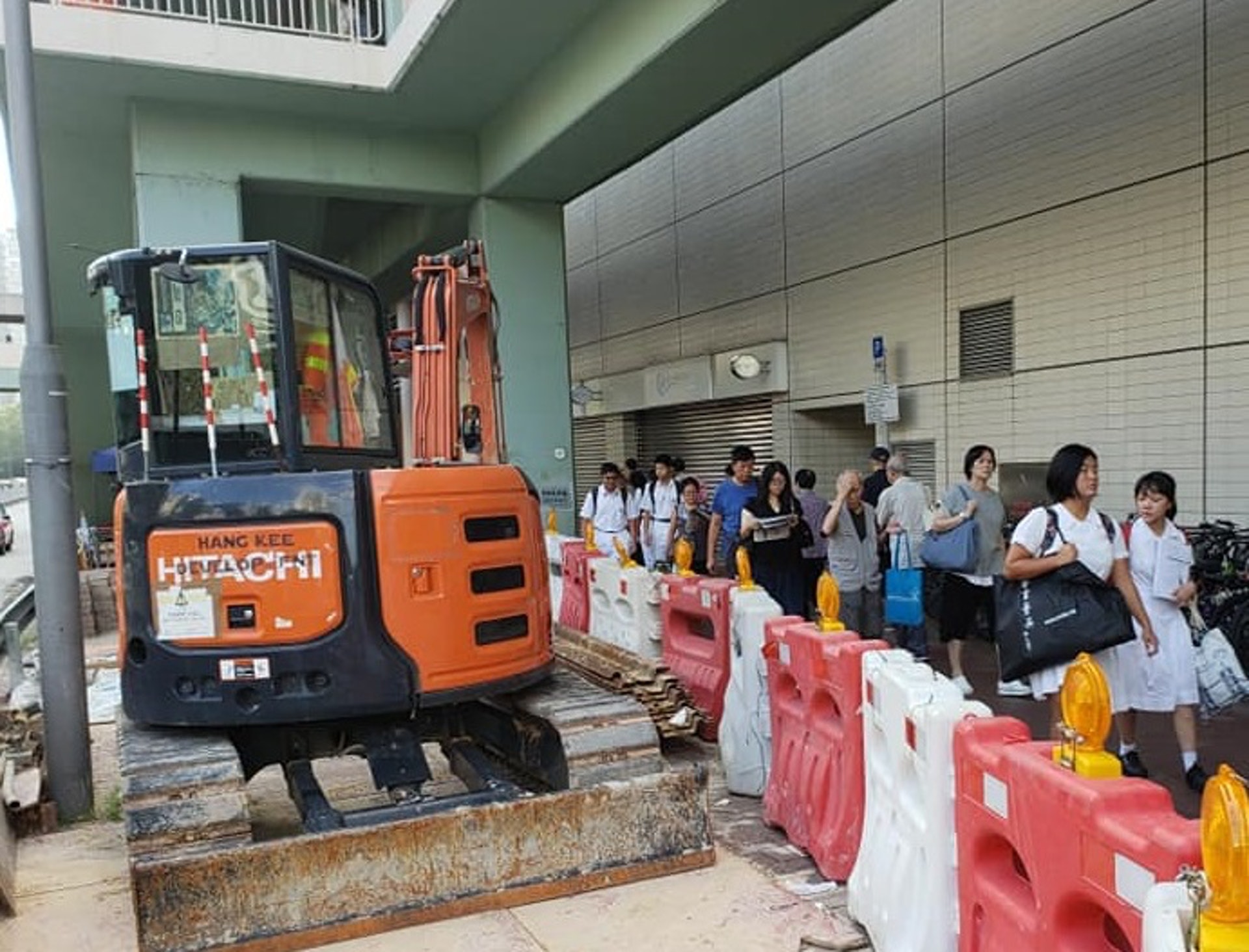
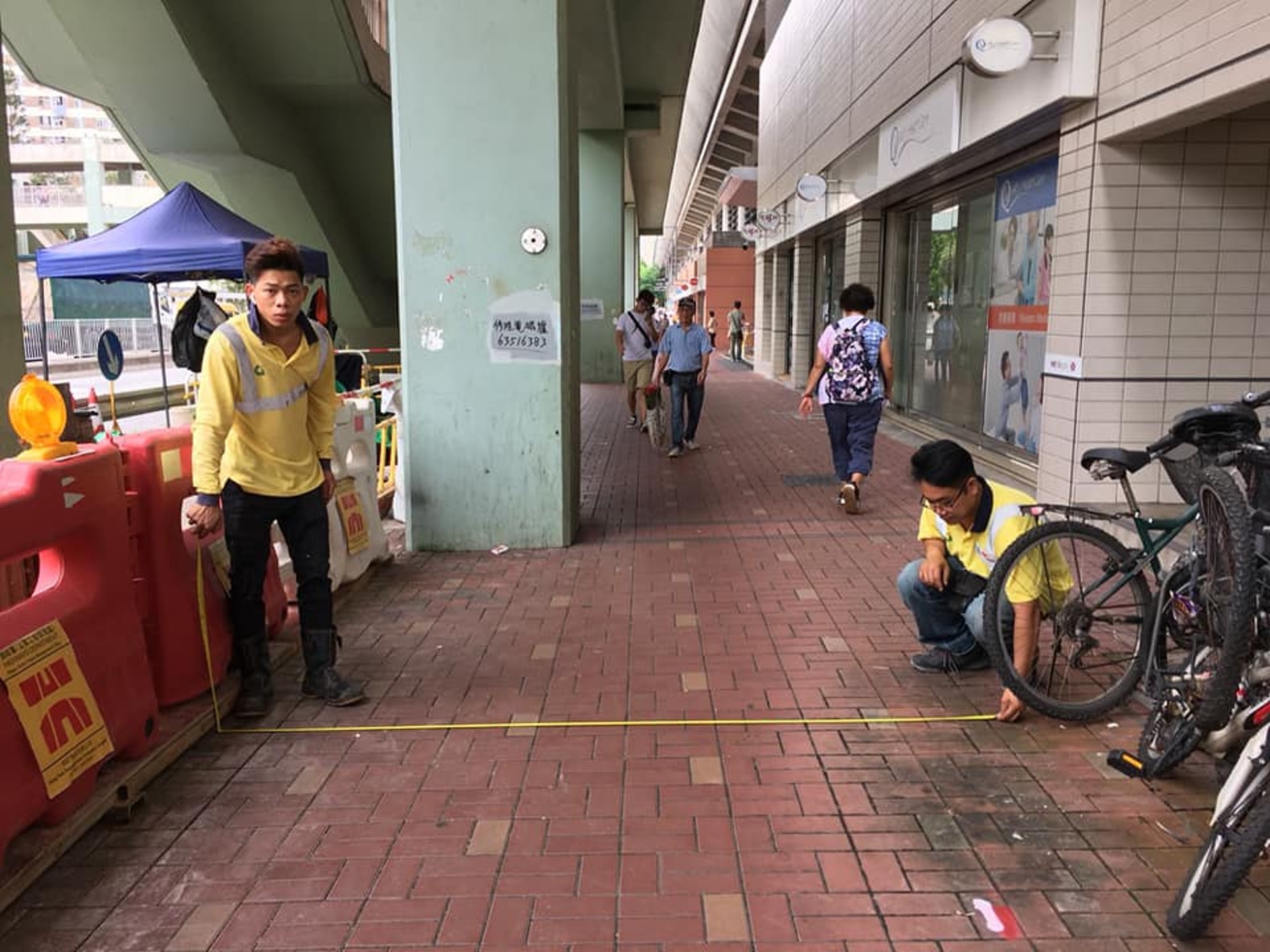
橫跨沙角街近沙角邨的行人天橋兩端計劃加建升降機,路政署正為此進行約1個月的勘探工程。沙田區議員丘文俊《香港01》稱,近日署方就涉事天橋南面的出口的2號升降機展開勘探工程,工程圍板佔用行人路,加上該路後設單車泊位,「令行人路闊度縮窄至2米」,低於路政署向其告知該處路段最低標準的2.5米。他指出,由於涉事路段鄰近沙田圍站出口,附近連接3、4個屋苑和學校,在早上繁忙時段,相當擠擁。
部門之間零溝通
他質疑,運輸署和路政署事前「零溝通」,亦無計算好工程規劃。他指出,雖然路政署曾打算要求運輸署配合,在施工工程前,移除位於涉事工程附近的單車泊位,以騰出空間,確保行人路暢通,惟竟無計算勘探工程亦會阻塞行人路。 

涉事路段鄰近沙田圍站出口,在勘探工程展開後,相當擠擁。(沙田區議員丘文俊提供)
 
有工程人員量度行人路闊度。(沙田區議員丘文俊提供)有工程人員量度行人路闊度。(沙田區議員丘文俊提供)

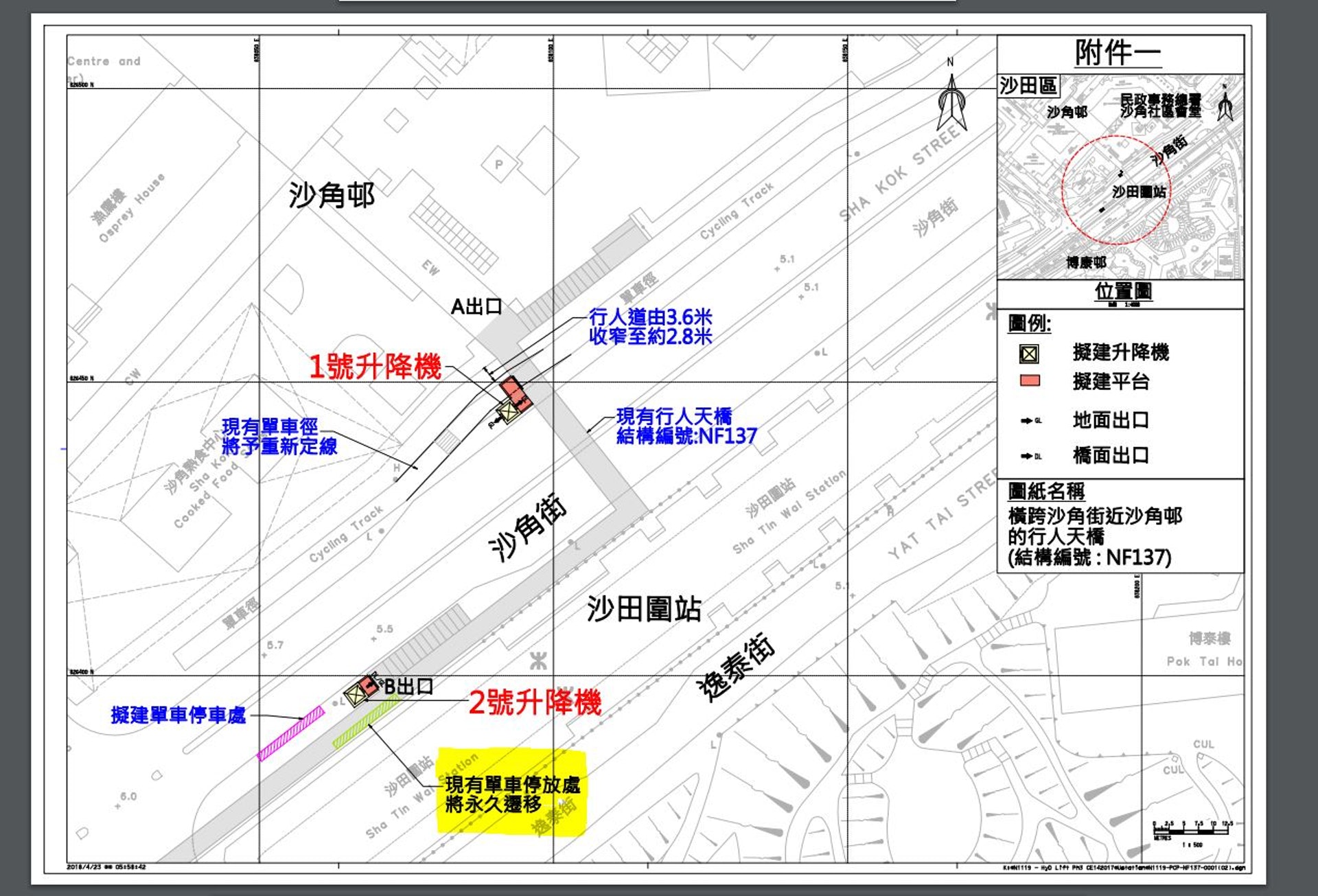
《香港01》翻查今年5月的沙田區議會文件,當中寫明「政府為配合涉事的2號升降機工程,將附近現有單車停放處將會遷移至 2 號升降機的西面,以提供足夠闊度的行人道予行人使用」,當中並無提及該路段行人路的闊度分別在勘探及施工時的影響。

橫跨沙角街近沙角邨的行人天橋工程圖。(沙田區議會交通及運輸委員會文件)
丘文俊質疑,運輸署和路政署事前「零溝通」,亦無計算好工程所需範圍。他透露,已經向路政署和運輸署投訴,對方視察後也通知了承辦商縮窄工程,為涉事路段闊度騰出多1 米,總闊度為3米。他批評,「政府部門間各自為政,出事才協調」。
路政署回覆《香港01》時稱,為配合加建升降機工程,前期勘測工程的承建商在上月底開始實施臨時交通安排,把沙角街鄰近現建成天橋的B出口(即近港鐵沙田圍站A出口)的一段約20多米長行人路的闊度由7米收窄至不少於2.5米,以提供空間挖掘探坑。按承建商委聘的交通顧問在實施前所作的預計,在實施臨時交通安排後仍有足夠空間應付現時的人流。
署方又稱,在接獲《香港01》的查詢後,已隨即派員進行實地視察,確定收窄後的行人路闊度足夠應付現時的行人流量。而承建商已稍為調整該位置的水馬,以提供更多空間供行人使用。如勘測工程對道路使用者造成不便,署方表示歉意.