2018年7月14日 星期六

西澳大利亞獨立? Auralia

西澳自由黨意圖脫離澳洲獨立  http://www.rthk.hk/radio/radio1/programme/City_Snapshot/episode/460089

延伸閱讀:  https://en.wikipedia.org/wiki/Auralia     https://zh.wikipedia.org/wiki/西澳大利亚州
投票结果是89-73西澳独立成国了?只因为税收太高 人民受不了了http://www.yeeyi.com/news/index.php?app=home&act=article&aid=182242

Would a WAxit really happen? WA Liberals to debate secession motion at state conference

Updated 31 Aug 2017


A group of West Australian Liberals has put secessionism back on the agenda, with a renewed push for the state to consider becoming an independent nation.
This week's WA Liberal conference will examine setting up a committee to consider secession, amid anger over the state's low GST share.
But experts say the cost of setting up armed forces from scratch and funding a public health system in its entirety — as well as the practical aspects of leaving Australia — make it unrealistic.
So if WA actually wanted to secede, how would it go?

What is actually being proposed?

The Liberal Party's Brand Division wants a 'WAxit' committee set up to seriously look at secession.

It would examine the option of "Western Australia becoming an independent state within the Commonwealth" and would report back by mid next year.
The Liberal state conference will consider the motion this weekend.
But even any recommendations in favour of secession would not necessarily have much impact, as motions passed at state conferences are not binding on Liberal parliamentarians.

Hasn't this come up before?

Yes — in fact secessionism has been a regular debate ever since WA somewhat reluctantly signed up to the federation more than a century ago.
In 1933, two-thirds of West Australians actually voted to secede, with Perth one of the strongest centres of support.
A delegation was sent to London to convince the United Kingdom's House of Commons to let WA go it alone, but it refused to consider the matter.
Secession movements have come and gone ever since, but none have been as prominent.

Why are people angry?

A feeling that WA gets a raw deal from the Commonwealth is the biggest driver, with advocates pointing to the state's low GST share as a key reason for this push.
There is support in high places too, with WA Liberal president Norman Moore among those who have said the state should secede without significant reform in its favour.
"There is an element who feel the state does get a raw deal from decision makers in the east," political analyst Peter Kennedy said.
"I think the majority go along with the federation, but from time to time a noisy minority do make their voice heard."

Can states secede from Australia?

The Australian Constitution describes the federation as "one indissoluble Federal Commonwealth", strongly suggesting states cannot secede.
That is one reason constitutional experts have long dismissed the prospect of secession as unrealistic.
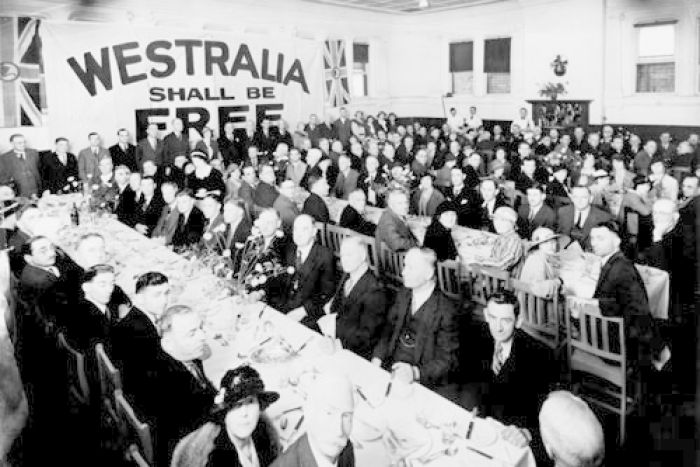


Photo: Members of the pro-secession Dominion League meet in Western Australia during the 1933 referendum campaign. (Supplied: State Library of WA/Wikimedia Commons)

"There isn't an obvious way in which a state can legally secede from the whole of Australia," Melbourne University constitutional law expert Cheryl Saunders said two years ago.
Most likely, a serious secession attempt would need to start with a vote in favour in WA — but exactly what would need to happen beyond that is unclear.

What other difficulties are there?

If Western Australia became its own country, like any other nation it would need to fund its own military, print currency and give its citizens passports.
An independent WA would also need to fund its health and education systems on its own, set up embassies across the world, pass laws for countless issues currently covered by Federal Parliament and establish intelligence agencies.
Because of those issues, the prospect of secession is seen as unrealistic for financial reasons as much as anything else.
"I doubt whether it is economically viable for WA to secede, above anything else," Mr Kennedy said.
"Even with our stronger financial position with resources, I don't think we'd have the financial resources to do it."

WA would also be left to compete on its own in international sport, potentially pitting it against Australia in events such as international cricket and football World Cup qualification.
---------------------------------------------------

WA Liberal Party votes for watered-down secession motion

Updated 3 Sep 2017


WA Liberal Party members have passed a WAxit motion for a committee to examine if the state could become financially independent.
The motion was put forward at the party's state conference by Rick Palmer from the brand division who argued WA was getting dudded by Canberra.
"It wasn't a brainstorm one morning, this came out of the fact that a group of us had been talking to people expressing an anger at the way the federation's treating Western Australia," he said.
"It doesn't just go to the GST. We send a significant amount of revenue in the form of income tax ... capital gains tax, superannuation contributions' tax all goes to Canberra.
"Our premiers and our treasurers go over there like Oliver Twist and come back with an empty begging bowl.
"It's not reasonable and something has to change."
The motion called for the state council to establish a committee with three former members of Parliament and three members of council to "examine the option of Western Australia becoming a financially independent state".

The motion did not initially contain the word "financially" but an amendment was passed to make it "financially independent".
WA Liberal leader Mike Nahan voted against the motion.
"There is absolutely no doubt that federation that has evolved over the last many decades is doing well by Western Australia, indeed the nation," Dr Nahan said.
"I can't argue with all those points about the unfair allocation of money withdrawn from the state.
"But ... we're like a family, someone told me many people who are large families will wish they had single-child family, but that's not possible.
"We are a family, it's a great family, we need to work within the family."
The motion was passed 89 votes to 73.
The committee's response will need to be referred to the State Council by July next year.

Opponents worried about 'lunatic fringe' label

The main arguments in the "yes" camp centred around the level of discontent members were hearing from the community.
"They are furious, they're ropeable, these are the members in our branches that we have to convince to re-join because they're so angry with the lack of action," one member said.
But the "no" voters were worried that the party could be labelled as the "lunatic fringe".
WA Liberal Party state president Norman Moore supported the motion and said it would send a very clear message to Canberra.
"I think it tells them that Western Australians ... are not happy with the way in which Western Australia is being treated," Mr Moore said.
"Now the GST is symptomatic of that, but it is more than that.
"Because we are long way from Canberra we feel that we are being ignored and that our interests aren't being taken into consideration by both sides of politics."
Dr Nahan fought to have the reference "WAxit" removed from the title of the motion but Mr Moore would not budge.
His first speech to the Liberal Party faithful earlier in the day was somewhat overshadowed by the motion.
Dr Nahan used his speech to acknowledge the "mistakes" the party had made that led them to an overwhelming loss in the March election and outlined his plan to woo back voters.
"[WA voters] turned from us to the Labor Party in large numbers," Dr Nahan said.
"Our job is to bring them back. The party of Mike's mates."

First posted 3 Sep 2017
---------------------------------------------------------------------------------------

过去十年每一个西澳人居然给堪培拉送了那么多钱!

2017-09-14   http://www.sohu.com/a/191893498_816122
西澳纳税人在过去十年间向联邦政府输送了1710亿澳元,相当于其他州和领地对西澳的贡献坐享其成。
按人均计算,每一位西澳人都贡献了$71,299澳元来支持整个国家的运转。而北领地相当于每个人都领取了$166,000的补助。只有新州自2005年起开始对联邦政府有财政贡献,但其贡献与西澳比起来,就相形见绌了。


财政部在上一周的预算中透露,西澳对联邦的经贡献是217亿元,相当于每人8516澳元;新州的贡献约为每人599澳元;维州的贡献约为每人216澳元。

南澳是联邦中最大的伸手党,从联邦政府那里拿了比贡献更多的93亿澳元。但是若从人均获得基数上看,北领地是遥遥领先的,平均每人伸手要到了18,972澳元的补助。

在过去十年,西澳向中央政府上交了1710亿澳元,远远大于他所分配到的资金。南澳获得了710亿澳元的分配;北领地获得了人均166,000澳元,总数380亿澳元的配额。

财政部长Ben Wyatt说,西澳的贡献应该是联邦政府在资金分配时考虑的一个重要因素。堪培拉应该考虑将更多的资金分配给西澳,比如在西澳提出修建Metronet线路时。西澳在补贴别的州的同时,也有自己的财政困难。

如今,许多的西澳家庭正在面临财政上的困难。而这组数据的发布,会让大家深深的感到震惊。因此西澳人的沮丧,是合情合理的。
-----------------------------------------------------------------------------------------
西澳自由黨大會將成立委員會,研究西澳脫離聯邦成為獨立州的選項。https://www.sbs.com.au/yourlanguage/cantonese/zh-hant/article/2017/08/31/zi-you-dang-du-pai-tai-tou-zai-chang-xi-ao-du-li?language=zh-hant


西澳有自由黨員不滿消費稅稅收分配「過低」,將成立委員會研究西澳脫離聯邦成為獨立州的選項。
費法斯傳媒報導,本週末舉行的西澳自由黨州大會上,將有自由黨人動議西澳脫離聯邦獨立,預料動議可獲西澳自由黨高層支持,並將組成委員會研究選項。
如果動議獲通過,委員會將由三名自由黨前議員、三名州理事會現任委員和一名行政人員組成,在明年 7 月前作出建議,但建議對自由黨在西澳的州議員無約束力。
獨派:獨立對西澳有利
有自由黨員不滿西澳只能分配到 34% 消費稅稅收。
西澳自加入聯邦起,一直認為自己受到人口眾多的州份歧視,近年有派別認為西澳洲礦業暢旺期貢獻澳洲經濟太多,失大於得,脫離聯邦對西澳有利。
投票獨立遭駁回
西澳在 1933 年投票,過半數西澳選民贊成脫離澳洲聯邦,但澳洲聯邦政府成功游說英國國會駁回投票結果。
澳洲憲法並無條款允許任何一州及領地脫離聯邦。憲法專家指,西澳脫離澳洲聯邦唯一可行方法,是通過澳洲全民公投。
西澳獨派的自治主張,並不一定讓西澳成立完全獨立的國家,但期望西澳擺脫澳洲聯邦政府的管治,在稅收和行政上完全獨立。

2018年7月10日 星期二

每年百宗阿根廷冠軍馬的複製及其配種牟利活動


圖文轉載自:  https://www.cbsnews.com/news/the-clones-of-polo


The clones of polo

The horses of an Argentine polo club may look normal, but the way they came into existence is anything but conventional.
You don't expect to hear that some of the most cutting-edge biotechnology is now part of the elite game of polo, "the ancient sport of kings."
But on a trip to Argentina last December, we went to a big polo match -- and discovered that several of the champion horses on the field were clones.
It's a big day in Buenos Aires — the final match in this year's World Cup/Super Bowl of polo called the Argentine Open – with the usual pageantry, the tango included. In polo, the horses, called ponies, are just as important as their riders.
The two teams are La Dolfina in white and Ellerstina in black.


                                                                                          Adolfo Cambiaso   CBS News
                                  

Each team has four players who ride as many as a dozen horses during matches. All of the players today have reached the highest ranking in the sport – a 10 goal handicap.
The player generating the most interest is the man in the blue and white helmet, Adolfo Cambiaso. He's led his team to victory for the last five years. At 42, he's the Tom Brady of polo.
Adolfo Cambiaso: I love the sport that I do. I love polo. I love horses.  And so I try to be the best.
Lesley Stahl: You are number one in the world in your sport. That's stunning, isn't it?
Adolfo Cambiaso: It's strange. When they say it to you, you don't feel like it but…
Lesley Stahl: How long have you had this title? How many years?
Adolfo Cambiaso: For 22 years.
Lesley Stahl: You've been the best in the world for 22 years?
Adolfo Cambiaso: That's what they say.
At age 25, Adolfo decided to create his own polo team called La Dolfina, and a breeding business from scratch. Today he has nearly a 1000 horses that are fed a special diet of plants and grasses grown on his massive farms.
Adolfo Cambiaso: If they have a little pain somewhere I dig a swimming pool for them just to swim.
A swimming pool for the horses, where they do laps and stretch out their sore muscles.
Lesley Stahl: And they like it?
Adolfo Cambiaso: They love it.
Lesley Stahl: They do? They like to--
Adolfo Cambiaso: They love it. They jump on. It's amazing.
His most prized horse for a long time was named Aiken Cura. But at the Argentine Open 12 years ago, Aiken Cura's leg was broken. And Adolfo was devastated.
Adolfo Cambiaso: More than anything, I say, "Save this horse."
Lesley Stahl: He was your favorite--
Adolfo Cambiaso: Yes.
But the horse could not be saved. Before they put him down, Adolfo made a fateful decision: he asked his veterinarian to save some of the horse's skin cells.  He thought that one day he could bring Aiken Cura back to life through cloning.
Adolfo Cambiaso: I was really sad and I say cloning should work --
Lesley Stahl: How did that come into your head?
Adolfo Cambiaso: I don't know. I decided to keep some cells from him, just in case years later-- cloning-- is normal.
He remembered Dolly the sheep, the first cloned mammal. Since then, scientists have cloned cows, pigs, goats, and in 2003, the first horse.
Biologist Adrian Mutto, one of the first scientists to clone in Argentina, showed us the process: he starts with an egg extracted minutes earlier from a mare.
Dr. Adrian Mutto: You can see here, this is an egg. And with that needle, we eliminate all DNA of each egg.
Next, he replaces it with the DNA of the horse they want to clone.
Dr. Adrian Mutto: The next step is introduce again into the, into the egg the needle. This is the DNA into the egg.
Lesley Stahl: You did it?
Dr. Adrian Mutto: Yeah This is our cell and this is the egg.
Lesley Stahl: And that's it.
Dr. Adrian Mutto: That's it.
The new embryos are then incubated for one week. No sperm has been involved.
Dr. Adrian Mutto: We don't need the sperm.
Lesley Stahl: There's no male--
Dr. Adrian Mutto: Yes. Yes, no male here. Only me.
Lesley Stahl: But-- but that's incredible. The-- there-- it's-- so it's not a male-female reproduction at all.
Dr. Adrian Mutto: Yes.
Lesley Stahl: You're just taking a cell from whichever. Could be a mare or could be a male horse--
Dr. Adrian Mutto: Yes.
Lesley Stahl: And you're putting it in this egg--
Dr. Adrian Mutto: The cell, into the egg.
Lesley Stahl: No sex at all?
Dr. Adrian Mutto: And-- we, no. Poor horses.
The incubated egg is implanted in a surrogate mare who gives birth to the clone –- like this one that's 3 weeks old.
Cloning represented a business opportunity to this man, Texas oil heir and polo enthusiast Alan Meeker. He had long dreamt of building a fleet of champion horses, and now had a way to do it.
Alan Meeker: I did some short math and I realized it would take 50 years and about $100 million to do what I wanted to do. And I thought, "Well, why don't I just clone a bunch of horses, really, really good horses.
In 2009, Meeker founded a horse-cloning business and, a year later, licensed the technology that was used to clone Dolly the sheep.
Alan Meeker: "Okay, now-- now I need to find the best horses." So I put together an idea of licensing the genetics from the very best-- breeders in polo. I knew some people that knew Adolpho.
Lesley Stahl: Was he considered one of the best breeders? Not just the best players, but also one of the best breeders?
Alan Meeker: Breeders and owners of horses. His horses were performing better than anyone else.
Lesley Stahl: When Alan first approached you about cloning?
Adolfo Cambiaso: And I say yes the first day.
Lesley Stahl: Immediately.
Adolfo Cambiaso: Yes.
Lesley Stahl: And, "Guess what," you said, "Alan, guess what I have"?
Adolfo Cambiaso: Yeah. I wanna tell him that I have-- cells from a horse that I really loved that I would love to clone.
It took a while to get it right – one attempt failed, but after two years, Adolfo got his wish. The birth of a clone of his beloved Aiken Cura who grew into this magnificent, healthy horse, almost exactly like the original in strength, athletic ability and temperament.
Adolfo Cambiaso: When I saw him, I couldn't believe it.
Lesley Stahl: Did you know by just looking-- and of course it was a little foal at that point--
Adolfo Cambiaso: Yes. It was. But…
Lesley Stahl: You could tell?
Adolfo Cambiaso: To make sure, I took some hair from him, and I bring him back to Argentina to do the DNA.
Lesley Stahl: To double-check.
Adolfo Cambiaso: To double-check it was him.
At the same time, he decided to clone another horse -- his biggest star -– a mare called Cuartetera.
Now 17 years old, the original has been playing polo since she was 4 - a year younger than most polo ponies – simply because she took to the game so quickly.   
Adolfo Cambiaso: I think she's born to play, you know? There is those horses in life or like soccer players like Messi. It's not many.
Lesley Stahl: Like you.
Adolfo Cambiaso: No. I don't know. No. But what I'm saying, this horse is amazing.
He took us to the barn where Cuartetera lives with eight of her clones.
Adolfo Cambiaso: You see those-- these two little points--
Lesley Stahl: Yeah.
Adolfo Cambiaso: From this little point is where you make all these horses.
Lesley Stahl: This is where they took the cells—
Adolfo Cambiaso: Exactly.
Lesley Stahl: --to make the other--
Adolfo Cambiaso: To make the other. Because of her you get all these ones.
Lesley Stahl: And that was what you were thinking?
Adolfo Cambiaso: Yes.
Lesley Stahl: "I'm gonna"--
Adolfo Cambiaso: That was my dream but everybody was--
Lesley Stahl: --"clone the best."
Adolfo Cambiaso: --saying that I was crazy. And I like it right now because I'm having a good time hearing those people.
Lesley Stahl: Yeah, they're saying, "He's not so crazy anymore"-
And look what he's done: in seven years, he and his partners have created more than a dozen clones of Cuartetera.
Dr. Adrian Mutto: It's incredible for me. I never lose my, wow, this is-- my production.  This is my equine daughter.
Dr. Mutto, who was hired as the lead scientist in Adolfo's cloning business, took us to see the Cuartetera clones he thinks of as his children.
Dr. Adrian Mutto: This is-- Cuartetera number five.
Lesley Stahl: Oh my God.
Dr. Adrian Mutto: This is number four. Number three. Number nine.
Lesley Stahl: Oh my God.
Dr. Adrian Mutto: Number six.
Lesley Stahl: You can tell which one.
Dr. Adrian Mutto: Yeah, be--
Lesley Stahl: You're not reading anything--
Dr. Adrian Mutto: --because I know her by the-- but-- they are-- are all clones.
Dr. Adrian Mutto: Yes. Right now, we have 14.
Lesley Stahl: Just from Cuartetera?
Dr. Adrian Mutto: 14, and next year, 10 more. And 2019, 10 more.
In all, there are more than 100 clones from several of their best horses. In each case, he said the clones are strikingly similar to the originals in disposition, athletic ability and appearance. But not exactly. For example, the Cuartetera clones all have white markings, but with different shapes and in different places, some on the face; some on the ankle.
But all the Cuarteteras seem to have inherited the original's calm, self-contained personality.
Lesley Stahl: So the genetics include this temperament?
Adolfo Cambiaso: Yes.
Lesley Stahl: And do the clones get along with each other?
Adolfo Cambiaso: Yeah, because they live together all year long. So-- from here, they go to the farm together, then they move in blocks. If you take one out of them, they are looking for it.
Lesley Stahl: They miss the one that you take out.
Adolfo Cambiaso: Yeah.
Lesley Stahl: Did the clones have any special health issues?
Adolfo Cambiaso: No.
We talked to scientists at the National Institute of Health and were told there is no evidence that cloned animals suffer disproportionate health problems, though they have a slightly higher infant mortality rate. At first, many of Adolfo's cloned embryos died during gestation. But they refined their technique and now tell us they have an 85 percent successful birth rate and have not experienced any health problems.
Lesley Stahl: So as far as you are thinking, they're exactly the same in health, longevity.


Adolfo Cambiaso: Si.
Lesley Stahl: Ability to play the game, all of it.
Adolfo Cambiaso: Similar. Similar. Not exactly the same…
Lesley Stahl: What are the differences?
Adolfo Cambiaso: There is some that are a little bigger. Some eat more, some eat less. Or they move a little bit different. But the mind are really similar.  The good thing about it, they are machines, all of them.
Machines -– that's polo talk for horses that never quit.
But how would they perform in competition? At the final at the Argentine Open, Adolfo gambled that his Cuartetera clones would be as good as the original and, for the first time, he rode them almost exclusively.
Regulators of thoroughbred horse racing worldwide have taken a firm stand against cloning. But there is no such prohibition in polo and so cloning is spreading to teams beyond Adolfo Cambiaso's. It raises some thorny questions: does cloning give a team an unfair advantage? Is it ethical? And where will it lead?
In December, at the final match of the Argentine Open in Buenos Aires, one team rode clones while the other refused to. The competition was as much about the merits of cloning as it was a sporting contest.
Out of more than 850 professional polo players, Argentine native Adolfo Cambiaso – wearing the blue and white helmet and the jersey marked number one, is the best player in the world. He's held that ranking for 22 years and is now leading a cloning revolution. He's cloning his best horses; the one he's riding is a clone. He's competing on them – and winning.
Lesley Stahl: When you're on one of the clones playing, is there a special feeling? Knowing that h-- you know, this is something that was your idea, you brought it to life--
Adolfo Cambiaso: Yeah. In this stage of my career-- the last couple of years for me to play and prove that the clone works and play with Cuarteteras and everything is an extra motivation for myself, for sure.
Lesley Stahl: I don't know that you need extra motivation.
Adolfo Cambiaso: Yeah, I do. I do.
He's created 14 clones of Cuartetera, his very best horse – a 17-year-old mare who is fast, easy to direct and can turn on a dime. She was honored last year as the best polo horse in history. Her clones seem to be just as gifted.
Lesley Stahl: Are they all as good – I want to call her Mama. I don't–- That's probably not the right word.

Adolfo Cambiaso: The original. Yeah.
Lesley Stahl: Are they as good?
Adolfo Cambiaso: I already won two Argentine Opens with the clones. So they will end up being as good as her I think.
Cuartetera's clones are identified by numbers.
Lesley Stahl: Shouldn't they have names?
Adolfo Cambiaso: They have names.
Lesley Stahl: Well, they don't.
Adolfo Cambiaso: Cuartetera.
Lesley Stahl: Yeah, but-- m--
Adolfo Cambiaso: Cuartetera one, two, three, four--
Lesley Stahl: Was that your idea?
Adolfo Cambiaso: Yes. Because I-- I believe that she is a Cuartetera. All of the ones that I ride, they are Cuarteteras.
Lesley Stahl: So you actually think--
Adolfo Cambiaso: She's Cuartetera when I play.
Lesley Stahl: When you're-- so six is Cuartetera, is--
Adolfo Cambiaso: Is Cuartetera.
Lesley Stahl: And when you're on nine, it's the same thing?
Adolfo Cambiaso: Cuartetera.
Lesley Stahl: But she's an individual.
Adolfo Cambiaso: Yes. But the DN-- DNA, it's a Cuartetera.
Lesley Stahl: But when you have identical twins, they each get a name.
Adolfo Cambiaso: But this is not twins, it's a clone.
They can now create 100 clones a year and they're using them in Adolfo's already successful breeding business. They mate the clones with champion horses and sell their foals ( 指的是未滿一歲的小馬, 公的叫colt , 母的叫filly) for up to $250,000. But they never sell the clones.

Adolfo Cambiaso: You sell the clone, you sell the blood, you sell the line, you sell the DNA, you sell everything if you sell a clone.
Ernesto Gutierrez: We keep the key of the genetics and this was, I think, the good business to make that decision in the past.
The idea of never selling the clones came from Ernesto Gutierrez, a shrewd Argentine businessman, who became a third partner in the cloning venture. The cloning operation was set up here on his 500-acre property outside Buenos Aires that includes three polo fields, and a nursery where the clones are born. They are carried by surrogate mares who treat them like their own.
Lesley Stahl: Are these all cloned babies in here?
Ernesto Gutierrez: All cloned babies?  Yeah.
Lesley Stahl: And these are the surrogate mothers? And does the mother think it's totally her baby?
Ernesto Gutierrez: Totally, totally. Look at that.
Gutierrez took us back to see the newest one – that 3-week-old clone of Cuartetera who has her own nurse.
Lesley Stahl: Oh, look how sweet. And frisky. Oh, look at that, oh my.
Not everyone in polo thinks cloning is a good idea - including Adolfo Cambiaso's main rival and opponent at the final of the Argentine Open.
Facundo Pieres: There's a lot of guys cloning. But I think that they have to be careful, you know because, the thing is that they're opening too much, you know? I mean--
Lesley Stahl: Pandora's Box. You know what that means? They let-- opened the lid. And all the problems come out—
Facundo Pieres: Exactly.
Facundo Pieres is number two in the world, right behind Adolfo. He showed us what he can do, like dribble a three-inch ball in the air while galloping down the field 20 miles an hour. He's the captain of Ellerstina, an old-school team made up of three brothers and a cousin.  They are committed to keeping it a family enterprise.
Lesley Stahl: Do you ever get angry at each other?
Facundo Pieres: Yes. Yes, but in a good way. Never-- never bad.
His team is headquartered at another sprawling estate where they operate a multi-million dollar breeding business selling foals and embryos. They believe they can produce better horses through their breeding practices - by mixing the DNA of two different horses, rather than by replicating just one.
Facundo Pieres: We wanna keep it this way. What we have here is amazing
Lesley Stahl: In polo, what's more important, the horse or the player? I was told that it's 80 percent the horse. Sorry--
Facundo Pieres: Yes, I-- I agree. No--
Lesley Stahl: No offense.
Facundo Pieres: No, I agree. I agree. I totally agree. I think that the horse is. But of course, you need to have a little bit of-- of talent and ability and-- and experience in the head, you know?
Facundo's team – Ellerstina - has made it to the finals the last 4 years, but lost each time to Adolfo Cambiaso's team. Fueling the rivalry on the field is a bitter history between them: Adolfo played on the Ellerstina team for 9 years.
Adolfo Cambiaso: Because of what happened, that I left Ellerstina and the rivalry is there--
Lesley Stahl: Intense.
Adolfo Cambiaso: Yeah.
Lesley Stahl: To this minute.
Adolfo Cambiaso: Yeah.
Lesley Stahl: Do you feel it too?
Adolfo Cambiaso: But it's fun.
Lesley Stahl: Oh, you like it--
Adolfo Cambiaso: You gotta have rivalry to be better player too.
There's more. Before he left Ellerstina, Adolfo bought Cuartetera, as an embryo, from the Pieres family… the very horse he is now cloning to compete against them.
Adolfo Cambiaso: I was lucky to end up with Cuartetera.
Lesley Stahl: You cloned from the best horse in the world.
Adolfo Cambiaso: But she's born on my farm. I create her.
Lesley Stahl: There are people who object to cloning on religious grounds… Or on moral grounds. So what is the answer when people challenge you? When they say, 'Man should not be doing this' because of these difficult spiritual questions?
Adolfo Cambiaso: I don't see it, I don't see it wrong, to be honest. I'm just-- doing something for-- to improve my game, my sport. And I think the Cuateteras did improve my game, my sport. And I'm not going farther than that.
Lesley Stahl: But, is there an unfair advantage in terms of the game, in terms of the sport?
Adolfo Cambiaso: No, because everybody's able to clone. Now everybody's kind of trying to start cloning. So the advantage is that I did it seven years ago.
Lesley Stahl: So in 30 years, people will still be riding Cuartetera?
Adolfo Cambiaso:  Yes.
Lesley Stahl: And so it could go on forever.
Adolfo Cambiaso: Yes. Yes.


Alan Meeker, the Texas businessman who is Adolfo's cloning partner, is well aware of the controversy around cloning technology in the U.S. and the ban against it in thoroughbred horse racing.

Lesley Stahl: Is a really good polo player-- does he have-- an unfair advantage if he's on a clone of one of the best-- polo horses ever?
Alan Meeker: Of course. Horses are 80 percent of the game anyway. So if Facundo Pieres finds a horse that is better than Cuartetera than he has an advantage over his competitor.
Lesley Stahl: But he'll have only one. And that horse will get tired, and he'll have to switch to another horse in the game, whereas Adolfo will have 8.
Alan Meeker: Right.
Lesley Stahl: So it's still an advantage.
Alan Meeker: Right.
Lesley Stahl: Is that fair?
Alan Meeker: Under the rules it's fair. There's no restriction on…
Lesley Stahl: I know but the game — but sportsmanship, just the nature of the game.  Has this changed the very essence of the game of polo?
Alan Meeker: No. I think what it's done is probably raise the bar.
Lesley Stahl: You're going to have to clone.
Alan Meeker: Could be. Yes.
Lesley Stahl: Do you have any moral problems with cloning a human being?
Alan Meeker: Yes. I disagree with it. I know a good reason, lots of good reasons to clone-- body parts, like hearts and lungs and pancreases, if it could be done in a productive manner, that can save lives. But I've been asked by some of the wealthiest people on planet earth to clone a human being and we--
Lesley Stahl: You have?
Alan Meeker: Absolutely.
Alan Meeker: And the answer is always-- a resounding "no."
Lesley Stahl: Well, they must have a reason.
Alan Meeker: And they won't give it to me.
Lesley Stahl: They don't tell you why?
Alan Meeker: No.
Lesley Stahl: I'm thinking if science can do it, science will do it and maybe one day, you know, they'll be clones and we'll laugh at all the people who were questioning the morality of it now.
Alan Meeker: Someday someone will do it--
Lesley Stahl: Yes.
Alan Meeker: And we will either laugh or we will cry. But I'm not gonna be the one to take that-- that leap.
Lesley Stahl: It could be done today.
Alan Meeker: Yes.
Lesley Stahl: I assumed there'd be a big difference between a horse and a human. Lots of differences.
Alan Meeker: Surprisingly little. Yeah. Surprisingly little.
At the final match at the Argentine open, Adolfo's team and the clones were expected to win, but seven minutes in, Facundo's team was ahead, three goals to one.
Adolfo's team fought back; at halftime, the score was, the cloners, 7; the breeders, 6. It was so tense that at times it was as quiet as a tennis match.
The end of the game was thrilling: as expected, Adolfo's team was ahead, 13 to 10, but then Facundo's team in a final blast came back to tie the match.  
Adolfo Cambiaso: I never think I'm-- I gonna lose.  I never.
Lesley Stahl: Well, we saw you right before the overtime.
Adolfo Cambiaso: Yeah.
Lesley Stahl: And here you are. Like that.
Adolfo Cambiaso: In that moment, I was trying to think, "Which is the best horse for that moment?"
He debated, should it be Cuartetera 9? Or 5? Finally he picked number 6.
In the first minute of the sudden death overtime, Facundo's team lost control of the ball.
Adolfo's team recovered and Adolfo on his mighty Cuartetera 6 outran everyone and whacked the ball setting up the winning shot.
Watching, you had to wonder: was it the clones or the world's best player that made the difference?


大體老師李敖陳肇始陳立基

15年前鳳凰衛視之《李敖有話說》:「我李敖在我活著的時候就把我的屍體捐出來了」,放話將把遺體捐給台大醫院,眼角膜可給路人,至於骨頭可以掛在台大,打趣說要讓後人知道他「多麼有骨氣」,其次也開放恨他入骨的人參觀,但他曾因攝護腺癌手術撤回捐贈  Source: http://www.chinatimes.com/realtimenews/20180322002574-260404


香港大學生物醫學學院副教授陳立基見證港人對捐贈遺體的態度逐漸開放,他回憶道,港大40多年前接收第一具遺體作為醫科生的「大體老師」,助其學習解剖知識,惟捐贈數目一直寥寥無幾,時至10年前推出遺體捐贈計劃,情況漸改善,由初時每年3至4宗,增加至近年每年數十至近100宗捐贈,登記捐贈人數更達2000至3000人。身為醫科生老師,陳立基毫不猶豫地「身教」,決定日後離世後捐出遺體當「大體老師」: 「棟喺度教佢哋,瞓喺度(過世)教多佢哋一次。」. 食物及衞生局局長陳肇始表示,器官及遺體捐贈也是發揮大愛精神,而本港每年有2000多人等候器官捐贈,但成功移植器官者僅100人左右,呼籲市民支持器官捐贈。她又指,不時收到熱心人士查詢,擔心捐器官及捐遺體只可二揀一,她強調兩者無砥觸,可以把適合器官捐予有需要病人,再當上「大體老師」作醫學教育,而她透露日後一旦離世也會選擇這樣做。
Source: https://www.hk01.com/社會新聞/118024/港大解剖學專家願做大體老師-決死後捐遺體-身教-助醫科生實踐 


食物及衞生局局長陳肇始, 右為港大生物醫學學院副教授陳立基(張美蘭攝)Source: https://www.hk01.com/社會新聞/118024/港大解剖學專家願做大體老師-決死後捐遺體-身教-助醫科生實踐 

下圖為香港大學捐贈表格之部份規章:


                                                          Source: https://www.med.hku.hk/bdp/chineseform.pdf


收拾遺體因而是教學科研的一個組成部份, 不存在"教授執垃圾影響校譽"問題.  大學醫學院以外, 其他院糸有沒有類似的回收研究活動?  答案是全部都有.  問題的癥結是為什麼會產生這一類問題?  它的社會背景是什麼?  

2018年7月8日 星期日

台湾离岸风电竞价最低2.2元

台湾离岸风电竞价最低2.2元


2018-07-06 中国时报     轉載自:    https://www.china5e.com/news/news-1033603-1.html                 

近日,台湾离岸风电竞价开标,北陆电力与玉山能源、沃旭等2家开发商,共4个风场获选,令外界跌破眼镜的是获选竞价价格为每度2.2245元至2.5481元,不仅低于目前陆域风电2.8元,也低于台电现今平均电价2.6元。业者不讳言,这结果可谓为积极发展离岸风电的亚洲市场投下震撼弹。

经济部长沈荣津日前表示,竞价厂商与遴选最大的不同是,不必配合建立本土供应链、基础设施,成本较低,每度价格应可低于5元。昨日面对结果,沈荣津满面笑容透露,这次竞争真的激烈。

经济部于6月22日完成离岸风电场址竞价开价作业,并邀请竞价厂商全程参与,计有7家开发商、12个离岸风场争取1664MW竞价容量。结果出炉后,部分业者面色凝重步出会场,也有业者认为价格有够夸张。今年度离岸风电趸购电价约为每度5.8元,这次得标价不只低于其一半,也低于目前陆域风电价格。据了解,这次价格较具竞争优势、排名前半厂商,厮杀相当激烈,多压在每度3元以下。

而得标风场包括北陆电力(NPI)与玉山能源的海龙二号及海龙三号,以及沃旭的大彰化西南与大彰化西北风场,预估在2024至2025年完工并联。其中海龙二号获配容量232MW,得标价格每度2.2245元;海龙三号获配容量512MW,得标价格每度2.5025元;大彰化西南获配容量337.1MW,得标价格每度2.5480元;大彰化西北获配容量582.9MW,得标价格每度2.5481元。
这次竞价沃旭取得920MW并网容量,加计遴选并网容量,总获配1820MW,可说是最大赢家。沃旭能源亚太区总经理暨台湾董事长柏森文指出,2年前沃旭来台投资,在台北设立亚太总部。如今获得大彰化离岸风场在2025年的并网容量,代表沃旭拥有坚实基础,可以进一步拓展在台据点。

沃旭不讳言,当初透过遴选取得900MW并网容量,拥有相对高的趸购电价,有助于建立本地供应链并使其更加成熟,且可预见至2023年进一步投资时,当时风机技术提升、运维成本及风险也都显著降低,经谨慎评估才会开出这个价格。

市场人士分析,以2009年台湾初发展太阳能发电时的趸购价每度逾10元,离岸风电价格由之前遴选时的5.8元降至竞价的2.2245元至2.5481元,确实降很大,但距2024至2025年完工并联还有6至7年。

离岸风电竞价开标,得标价格比台电平均电价2.6元还低,业者大叹“有够夸张”。(DONGEnergy提供)    

中资“迎难而上”竞逐澳洲农业资产的真正价值何在?

排除“移民特权”和“桃源生活”,中资“迎难而上”竞逐澳洲农业资产的真正价值何在?

2018-03-14  作者:本站编辑   轉載自:  http://www.baomoney.com.au/industry/104349.jhtml

中国占世界人口的五分之一,耕地面积却不足10%,除了这个计算等式之外,地方性污染,肥料过量,城市化和气候变化正在加剧中国农地进一步减少,以及农业生产力下降。
中国地大物博的概念正在改变,人多地少,食品安全丑闻,中国被迫加大外国食品进口。但是中国也在扩大购买外国生产源地,从肉类到粮食类到奶制品类,中国在亚洲,非洲,拉丁美洲都增加了土地购买,当然触角也延伸到澳大利亚,美国以及欧洲。
纵观收购澳洲农场的队伍中,既有进军澳洲农业使之能与国内企业衔接配套,巩固自身上下游产业链的国企、私企;
也有跨行业投资农业进行全球资产配置,因而能够发展可持续性产业的上市公司;
还有贪恋澳洲洁净空气和健康食品、有土地情节,期望花几十万到澳洲购买小农场休闲养老的个人;
近两年来更增加一些计划在澳洲投资上亿买农用地,准备搞地产开发和旅游业的高端企业。
理想很丰满,现实很骨感。
当资本竞相追逐澳大利亚农业资产时,究竟投资价值几何?投资风险几分呢?

中国人在澳拥农田量年增九倍
澳政党促收紧外资收购
根据2017年年底发布的最新数据显示,中国投资者在澳洲拥有的农用土地大幅增加,仅一年时间已飙升了9倍。中国人现在坐拥澳洲逾1400万公顷农用土地,占澳洲总农业用地的2.5%。国家党对此深表担忧,再次呼吁联邦政府立更严格的外资所有权法规。
澳洲税务局(ATO)给联邦政府外资农田登记处提供的第二年度更新数据显示,一年中,中国投资者拥有的澳洲农田已从大约150万公顷增加到近1450万公顷。
英国人和中国人目前是澳洲土地的最大持有者,分别持有外资土地的27%和25%。
外国人现在拥有北领地和塔斯马尼亚所有农业土地的四分之一,占全国所有农田的14%。
外资还拥有新州和维州超过300万公顷的土地。拥有昆士兰1700万公顷土地,包括畜牧场、农田和屠宰场等;据悉,总共有140个国家在昆州注册拥有土地权;其中拥有最大土地权的三个国家是:英国(221万公顷,占2.2%)、荷兰(189万公顷,占1.09%)、和中国(163万公顷,占0.94%)。
在澳洲农用土地的外国持有国中,中国已超过美国、荷兰和新加坡,从第五位跃升至第二位。近年来赴澳投资者包括山东如意、浙江日发集团、上海中福集团、中房置业、大商集团等中企均在澳洲农业领域崭露头角,并吸引了较高关注。
中国人拥有澳洲农用土地的跃升,是因为一些大的投资,如上海中房产股份有限公司(Shanghai CRED Real Estate)与澳洲女首富莱因哈特(Gina Rinehart)联手对澳洲最大的私人养牛集团——基德曼养牛场(Kidman Cattle)的收购。
2016年12月,联邦财政部长莫里森(Scott Morrison)批准了这一收购计划,使中国人在澳洲坐拥的农用土地增加了260万公顷。目前莱因哈特的汉考克勘探公司(Hancock Prospecting)拥有基德曼养牛场67%的股份,中国公司拥有三分之一的股份。
2012年,堪培拉已经批准了中国山东如意对澳大利亚最大的棉花农场的争议性收购。
另外,中国食品巨头诸如光明食品,伊利和鹏欣等企业已经购买了几十家新西兰奶牛场和奶牛场,这些奶牛场和奶制品的产量在中国得到高度评价。
但目前,澳大利亚仍有多达99%农场企业仍然完全为国人所有,全澳多达88%——约3.433亿公顷的农业土地亦完全归属于澳洲人,这是澳国家统计局(ABS)今日发布的农地与水所有权调查最新结果。
面对农业领域快速涌入的外资,澳大利亚推出了农地与水权外资登记制度。
2016年9月,澳税务局的首份报告出炉,揭示出附着有海外利益的农业土地约占13.6%,这与ABS最新报告显示的12%(4860万公顷)外资比例大致相符。
外资所有的农地中,大企业占据主导,不到50家外国公司占据了95%外资农地。
截至到2016年6月30日,全澳有600多家农业企业有外资入股,仅约占总体的0.5%,不到1%。北领地外资水平相对较高,有6.9%的农企有外资入驻。调查还发现,大部分农业用水也多由澳人所有。

项庄舞剑,意在沛公?
—— 澳收紧外企收购力度被指是在“限制中国”
近日,关于中国影响力“渗透”澳大利亚经济、政治、社会的报道屡见不鲜,堪培拉政府采取行动:外国投资者未来在澳洲收购农业用地和电力设施将受到更严格限制。
澳大利亚国库部长莫里森2018年2月1日表示,澳大利亚将收紧外国投资者收购该国电力基础设施和农业用地的规定,政府将针对关键能源基础设施和优质农田领域的外国投资加大审查力度,赋予该国交易审查机构基于国家安全考量评估交易的新权限。
媒体普遍认为,此举旨在限制中国在澳大利亚的投资力度,澳社会对中国在商业、政治和社会的影响非常担忧。
莫里森称,将赋予澳大利亚外国投资审查委员会审查所有涉及能源资产出售交易的权限,以限制外国公司对澳大利亚电力企业的控制能力。
他在一份声明中说,政府将成立一个新的中心,负责审查澳大利亚关键基础设施中存在的国家安全隐患、间谍活动和胁迫风险。“我们鼓励有意收购或出售关键基础设施资产的各方尽早与外国投资审查委员会联系,以确定是否适用所有权限制或条件。”
另外,根据新规定,澳大利亚农民将有权优先购买价值超过1500万澳元的优质农业用地,以确保本土农民不遭到排挤。根据澳政府2015年通过的法律,外国投资审查委员会可对1500万澳元以上的农地交易进行审查,而此次新规将加入一个30天的时限:如果一项交易在30内没有被本地农民收购,国际买家才有权加入竞购行列。
外国投资者在收购价值超过1500万澳元(约合1200万美元)的农业用地之前,必须要证明该土地之前已经对本国居民公开挂牌出售至少一个月,保证他们有足够的机会去购买。在这一期限之后,该地才能够出售给外国人。
据媒体援引政府人士报道,新措施是为了避免一些土地所有者与外国投资者直接私下达成交易,根本不对外出售。
财政部长莫里森(Scott Morrison)坚持强调,堪培拉政府仍然欢迎外国投资者购买澳大利亚农业土地,"只要不违背国家利益"。
"我们希望看到公平和透明的程序。在一些案例中,外国企业收购了根本没有上市售卖的资产",一位熟悉莫里森政策思路的知情人士透露。
澳政府的新规定引发反对党工党的强烈不满。工党发言人就表示,政府此举不过是为了提升选民的支持率。这不过是向投资者传递错误信息的政治噱头。农场主在出售土地时肯定想把土地卖给出价最高的人,他们会在国内或国际市场寻求利益最大化,这是天经地义的。任何给投资者制造困难的事,对澳大利亚的农业来说都是一件坏事。
近日,澳洲富翁Kahlbetzer家族持有的农业集团Twynam Agricultural Group(以下简称:Twynam)拟出售位于新南威尔士州的三处农场。其中位于Lachlan河的旱地、灌溉地和种植园面积为47,000公顷。价值超过1亿澳元。
按照新规规定,任何价值超过1500万澳元的农地必须提前30日在全澳范围内进行公示后方可出售给海外投资者。Twynam董事长Johnny Kahlbetzer对此颇感不满。据其透露,农场目前已经接受了外方的要约。
他说:“新规出台的时候,我们和外方已经谈妥,就差签合同了。全国公示对于新发生的交易固然是一个不错的选择,但是我们的情况有所不同。我们已经拿到了不错的要约,并且我们已经接受了该要约。”
“按照新规,我们不得不从头再来。另外,公示、代理等费用估计会超过50万澳元。除非我们能够获得更高的出价,不然对于我们来说是一笔巨大的损失。”

澳大利亚农地的价值几何?
—为何困难重重之下,投资者仍然趋之若鹜?
据澳税务局统计分析,外资持有农地最大的用途是牲畜养殖,占地4580万公顷,占比88%;其次是作物种植,占地150万公顷,占比2.8%。
那么,中国公司在澳投资想要的是什么呢?
澳洲农产品在中国的形象,除了清洁、绿色、健康,还有一条是代表对生活品质的追求,这是澳洲食品与农产品呈现在中国中产阶层面前的四条宝贵特点。
澳大利亚有很大的空间来利用和发挥自己在业务运营及财务管理上的技能与经验,利用自己的知识产权、加工工艺与技术等。靠近亚洲的区位特点也给其带来巨大的比较优势。
除了以上这些投资者看重的传统利益点之外,不可忽略的是,随着城市人口的增长,城市的规模蔓延,澳大利亚当地市政府会对城镇周边农业用地的性质(乡村住宅区,乡村保护区,农业用地)重新定性,以前的农用地会变成居民住宅或商业用地。
虽然,这个过程非常缓慢。但一般来讲,土地变性,从农用地变成开发地对于物主来说是最大的利益套现,因此为大多物主和开发商所热衷和追逐。
此前,就有报道中提到,墨尔本80公里的小镇边缘一块30多英亩的地,由于当地市政府的城市边界规划,从农用地(Rural)变为了“城市发展地”(Urban Growth Zone),市政估价(以市政税Council Rates而言)从66万直接跃到114万。
也曾有人2003年花20万澳元在城边买了30英亩的农用地,没有住宅,因为太小,没有任何农业收益。2015年以近800万澳元以“没有批文的城市发展开发地”卖出。卖出时候,周边已陆续是住宅和商业开发地盘。
当下,伴随悉尼的扩建,原本城市边缘的农地更是岌岌可危。据预计,悉尼农业盆地在未来15年内或消失不见。
悉尼第一产业局(DPI)于近期公布了悉尼的农业报告。报告指出,2016年,大悉尼区共有约2210个农场,农地面积为 125,000公顷,雇用人员7000人。这些农产是悉尼主要的果蔬、家禽供应地,年产值超过7.8亿澳元。
悉尼盆地粮食产出占悉尼粮食供应总量的20%。根据悉尼科技大学(UTS)的研究人员的预测,该份额正在迅速下降。UTS可持续期货研究所高级研究顾问Laura Wynne表示,到2031年,悉尼盆地粮食产出占悉尼粮食供应总量的比例预计会下降至6%。
Wynne说道:“如果目前的情况得不到任何改变,则悉尼盆地的粮食产量岌岌可危。”
据预计,2014年至2034年间,悉尼新增人口可达160万。其中,近900,000人会定居在悉尼西郊。牺牲农地换取住房开发已经是大势所趋。
新南威尔士规划和环境部的最新数据显示,未来五年内,悉尼新建住房接近200,000套,相比过去五年(134,700套)增长了近46%。
澳大利亚统计局(ABS)公布的最新数据显示,截至2016年的十年间,悉尼西郊新增人口超过770,000人。伴随新南威尔士州政府把增加住房供应作为解决住房可负担性问题的主要手段,悉尼正在经历一场前所未有的开发热潮。
原本都是优质农田的地区,现在填满了住房。但这样的趋势以及在各方逐利之下,悉尼的宜居性、清洁的空气、优质的水体、生物多样性等等都会遭到威胁。

澳大利亚农业生产收购的关键资源
—不可忽略的水权
投资澳大利亚农业领域的三个主要目标是:
1. 农业用地;
2. 涉农产业;
3. 可交易水权。
前两个目标都是大部分人所熟识的,但水权也是值得更多投资人多加关注。此前,在澳大利亚干旱严重的年份,但有农场宁愿把水拿去市场卖掉,也不愿拿来灌溉自己的农田,因为卖水比种田所得还高。种种迹象显示,水资源已经继石油之后,成为投机客大举抢进的目标。
据悉,澳大利亚唯一一只水权基金Duxton Water(ASX:D2O)于9月16日登陆澳交所。基金由Duxton资产管理公司发起,设立于2016年4月,主要投资于墨累-达令流域水权相关资产。
澳大利亚的水权,具有资产的一般属性,通常是与地契一起注册。投资农场,水权是可以单独收购的。作为农业生产的关键资源,水权的价格也非常高昂。每兆升高保水的价格可达1,500澳元以上,并且有十分明显的地区差异和季节波动。
在澳洲买农场其实买的不只是土地,也是水。水利是农业的命脉。在水资源极其匮乏的澳洲尤其如此。没有水的土地,农作物耕种、牛羊载蓄量都受到限制。同时,澳大利亚政府不允许拦河筑坝(供牲畜饮水的池塘除外),即使河流从你家农场过,也并不意味着你可以肆意使用河水灌溉。
当一个水权拥有者在获得水资源分配后,他们可以选择使用于灌溉农场,或者将其卖给其他用户。分配账户所在的交易区域决定了持有水权人可以买卖年度分配用水的地区。
澳洲的主要交易区包括新南威尔士州和维多利亚州墨累河以及新南威尔士州Murrumbidgee河 – 这些区域的交易量占墨累达令盆地年度交易总额的一半以上。
澳洲的大部分水资源市场都包含在墨累达令盆地南部的河谷中。这个地区包括Murray和Murrumbidgee河。就水权市场而言,澳洲水市场分析师估计2016 – 17年度水权益市场营业额约为6.12亿澳元。墨累达令盆地南部水权总值超过145亿澳元。
每年在对获得水资源(分配)上进行的交易量也十分庞大: 年度水务交易市场的平均营业额在10亿澳元至20亿澳元之间。分配交易是一个简单的过程,由水务经纪人或澳洲三个水交易所之一进行交易。一旦获得批准,交易通常在双方对接后的两到三天内结算。
基于水权是拥有法律效益的,权利交易可能需要几周到几个月才能完成交接。
水主要由灌溉业农民拥有和交易。但是,由于资本增长,收益率和对冲潜力,资产基金和散户投资者越来越把水看作是一种有吸引力的投资项目。
拥有一定数量的水权,意味着每年可以使用不超过这些数量的灌溉水,当分配低于100%时,使用的水量需要乘以分配系数。水权作为资产,是可以随时出售的。如果在某些年份,水资源充足,还可以出售当年的分配水,保留资产。澳大利亚有完善透明的水资源交易市场。
澳大利亚水权交易遵循的原则有: 在满足保护环境和第三方利益的条件下,应允许进行地表水和有条件的地下水的交易;所有水权、水的使用和交易应以合适的水资源管理规划和农场用水管理规划为基础;注重交易的成本和影响;构建有利于水市场有效运行的管理体制和管理机构等。
澳大利亚:水的所有权和使用权归州政府。水权类型有三类:一是批发水权,即授予灌溉和供水职能的管理机构;二是许可证,授予个人及管理工程直接取水、用水的权利,有效期15年;三是用水权,与土地相关的农户灌溉、生活和畜牧用水权利。水的分配,早期是用水户申请,州政府批准。现在是政府开始实行水权拍卖,水权交易取得。
水权交易分为永久性的和临时的两种。水交易的方式可分为私下交易、通过经纪人交易和通过交易所交易三种。成熟有效的市场除了买卖双方参与外,一些中介如经纪人、代理商、收集商及投机商的参与也是必要的。
从总体上看,澳大利亚水权交易使水资源的利用向更高效益方面转移,给农业以及其他用水户带来了直接经济效益,促进了区域发展并改善了生态环境。用水户和供水公司出于自身的经济利益,更加关注节约用水,促进了先进技术的应用,提高了用水管理水平。
澳大利亚高度重视环境用水,环境用水具有优先权。消耗性用水要以保证生态可持续发展为前提,同时只有在环境用水与其他用水之间确定分配关系后,才能引入水交易。
为防止水市场出现垄断,必须采取有效措施,如规范交易程序、及时公开信息、大力发展水交易所等。对水经纪人和水交易所,要严格制定其职业道德标准和公开化标准。
目前,面对农业领域快速涌入的外资,澳大利亚政府推出了农地与水权外资登记制度。水权已经成为外资收购重点监管对象。因为水资源变得日益关键,政府将密切注意供水问题。现在买房子需要许多文档,而购买水权的文档还要更多。”
此前,在澳大利亚干旱严重的年份,但有农场宁愿把水拿去市场卖掉,也不愿拿来灌溉自己的农田,因为卖水比种田所得还高。种种迹象显示,水资源已经继石油之后,成为投机客大举抢进的目标。
为遏止海外投资者大量买进水权,恐对该国粮食与水安全造成威胁,澳洲政府强制外国投资者必须申报水权,以监控他们对澳洲水源的使用状况。

中资对澳农业投资风险预警
获得当地社区认同是关键
中国企业对外投资农业应避免采取在中国做生意的方式。想在当地经营成功,仅获得行政批准远不够,更要获得社区认可从整体看,中国农业“走出去”仍处于蹒跚学步状态。受投资国政治局势及经济政策变化等因素影响,不少投资项目存在亏损或停顿状态。
很多中国企业在‘走出去’时已经交了不少学费。如继续沿用目前的做法,特别是在澳大利亚等国,再交学费仍是免不了的。
比如,中国投资者没有与当地社区沟通,看看当地人是否支持他们的计划。不了解澳大利亚的政治生态、政治制度和架构,也不了解地方政府的重要性和当地社区的感受,在审批过程中就遭遇重大打击。
中国的农业投资者必须要停止在澳大利亚按照中国的方式做生意。他们需要从一开始就向当地人讲清楚他们为什么要在澳大利亚投资,以及自己除了钱,还会给当地带来什么。
要想在当地经营,仅仅获得行政的批准是不够的,还要获得‘社会执照’(即广泛的社区认可)。如果无视当地社区的感受,其经营注定会失败。
中国农业“走出去”时,政府和企业都应该具有强烈的风险规避意识:政府应通过各类手段为企业走出去提供良好的政策环境;企业则在向产业链各环节延伸之际,可通过与跨国企业相互参股方式尽量降低各类风险。
目前的情况看,中国农业投资者进入澳大利亚市场还存在一些“值得注意的问题”。
这其中包括了一些共性问题。例如,虽然并非所有的农业投资都是由中国的国企进行的,但不少澳大利亚人还是倾向于认为中国的投资者在某种程度上会受到中国政府的指示,并对此持有负面看法。
除此之外,不少澳大利亚人对中国农业投资者的担心是,其会对该国的土地照管不善,“常年过度耕种,肆意使用化肥和农药”,以及“不关心环境或不节约用水”等一系列问题。
澳大利亚当地人士认为:许多来澳大利亚投资农业的中国投资者,其实并没有得到过好的专业指导,存在着“手拿宏大的计划,却对当地情况缺乏了解和必要的敏感度”的现象。这是因为有些投资企业没有进行全面的尽职调查。
在没有获得恰当的建议前,澳大利亚的公司不该草率开展中国投资计划;中国公司在没有合适的顾问之前,也不应该轻易对澳大利亚进行投资。
中国的公司进入澳洲市场前还是需要聘请各方面的专业顾问,包括律师、管理咨询师、会计和公关专家等。
这一观点也被澳大利亚联邦政府的官员认同,一位官员表示,包括环保、水资源的准入和管理、能源、劳动力、健康以及安全,这些都需要做尽职调查。
如果他们(中国投资者)做了尽职调查,他们就会知道困难的程度,然后就知道要不要收购某项资产。或者如果他们决定进行下去,他们就知道会遇到什么情况。

结语
除了大型的农业资产收购,最近几年,中国人投资澳大利亚房产正方兴未艾,而越来越多的高净值华人则把目光转向了澳大利亚农场。
但由于澳大利亚和中国在农业方面的地理特征,人文环境,社会制度,法律法规,经济秩序等诸多不同,很多高净值个人投资者在投资澳大利亚农场时有很多误区:
以为在澳洲收购农地、农场,就如同在中国一样,可以找一个相对闭塞、落后、人迹罕见,山清水秀地方,花不多的钱,买个小农场,返朴归真,过世外桃园的幸福生活。打造一片远离城市喧嚣,贴近大自然,属于自己的领地,面朝大海,春暖花开。
其实,理想很丰满,现实很骨感。
首先,澳大利亚政府规定,海外人士不能购买休闲农场。因为澳大利亚政府明确规定海外人士不可以购买二手房,休闲农场不产生农业效益,其功能也就是一个二手物业。
其次,澳大利亚地广人稀,大约85%以上的人口都集中在距沿海50公里的沿海中心城市。且不要说乡下农场,即使是城郊离市中心30公里,不到一小时车程的城郊,一到傍晚就可以称得上人迹罕至,对于习惯了熙熙攘攘都市生活的中国投资人恐怕还须“三思而后行”。
再者,和澳洲的普通住宅一样,根据房地产的“涟漪理论”,生活方式农场的价格与面积大小和所处位置有关。想要离市区近的农场就要花大价钱。即使符合各种条件,最后购得农场,也并不自然而然的有了那种“采菊东篱下,悠然见南山”的优雅。因为,选择到澳大利亚来做农场主,就要履行农场主的基本职责。
比如:除草剪枝,修整花园,栅栏维护,动物检疫,驱虫打药,刈草施肥,防火防水,道路疏通,水源保护,等等。
如果不想自己亲力亲为做这些体力劳动,就需要雇佣劳工,这也就意味着在没有收益或收益十分有限的情况下还要再添加额外花销。与此同时,澳洲本地还有政策要求必须雇佣一定比例的本地工人,并支付一定数目的工钱。如此一来,农场经营很容易造成不盈利反贴钱的局面。
另外,澳大利亚政府虽允许海外人士购买农场,但并不意味着赋予购买农场人无限制居留澳洲的权利。换句话说,买农场和移民澳洲是两码事。
所以,要想购买农场并想长期留在自己的农场工作,还是要按照自己的情况向澳大利亚有关部门按流程规定申请移民,移民申请通过后才可以达到住在农场,自己管理农场的目的。
纵观收购澳洲农场的队伍中,既有进军澳洲农业使之能与国内企业衔接配套,巩固自身上下游产业链的国企、私企;
也有跨行业投资农业进行全球资产配置,因而能够发展可持续性产业的上市公司;
还有贪恋澳洲洁净空气和健康食品、有土地情节,期望花几十万到澳洲购买小农场休闲养老的个人;
近两年来更增加一些计划在澳洲投资上亿买农用地,准备搞地产开发和旅游业的高端企业。
但不管是什么性质的投资主体,都应在对澳农业资产投资决策中保持理性,加强风险意识,寻求专业建议。

2018年7月5日 星期四

为什么英国光伏没有补贴依然活得很好?

为什么英国光伏没有补贴依然活得很好?

2018-07-04  EnergyWindow  武魏楠  轉載自: https://www.china5e.com/news/news-1033322-1.html 
在这个世界上,没有哪一个国家发展光伏能够回避使用补贴这一方法。中国是这样,被誉为新能源发展标杆的德国是这样,远离欧洲大陆的英国也是这样。
根据《卫报》的报道,仅仅10年之前,英国国内的光伏装机几乎为0。而到了今天,夏季英国光伏发电量在最高峰时能够占到总发电量的五分之一,光伏发电出力最高能达到9.42GW。英国成为名副其实的光伏大国。
在这一成绩的背后是英国自2010年开始对光伏发电进行巨额补贴的结果。和绝大多数国家一样,英国实行FIT(上网电价补贴)政策,每年数亿甚至十数亿英镑的巨额补贴支援光伏发电(包含集中式和户用)。
然而随着时间的推移,补贴费用攀升的速度远超英国财政能够支付的空间。2015年,仅户用光伏补贴就超支约2亿英镑。2015年,在英国政府削减陆上风电补贴之后,就传出光伏补贴朝不保夕的传言。

英国人均电价消费组成部分
2015年8月27日,英国能源气候变化部公布了其FIT(上网电价补贴)审查结果,提出下调FIT近90%的建议。自2016年1月1日期,英国能源气候变化部将强制削减所有FIT项目,并将在每个季度实施一个默认的递减率。
靴子落下,英国光伏行业一片哀嚎之声(是不是有点熟悉这个场景)。彼时,英国光伏企业并非没有思考过补贴削减的问题。堪称是“光伏发展之光”的德国在2014年就开始削减补贴,试点电价竞价。英国行业预计光伏发电有可能在2020年彻底摆脱补贴,与化石能源竞争。但在2015年,光伏发电成本高达80英镑/mwh,而化石能源发电仅需50英镑/mwh。
一时之间,曾经是欧洲光伏装机增长最快的英国,遭遇光伏大滑坡。2016年前两月英国光伏装机21MW,去年同期则是81MW。2018年,英国预计光伏装机14MW,2011年的新增装机则是606MW。
英国光伏就从此一蹶不振了么?似乎恰恰相反,英国光伏行业即将迎来发展的新机遇。根据安永发布的可再生能源国家吸引力指数报告,英国排名第7,高于2017年和2016年的第10和13位。
英国企业Anesco位于贝特福德郡的10MW光伏项目是英国首个无补贴电站。与常规电站不同的是,这里还配备了6MW的储能设施,而这或许会成为光伏补贴日渐消退时,行业的“秘密武器”。
首先,这个6MW储能系统不仅能够为光伏电站服务,也可以和电网之间形成联动,向电网提供储能服务。其次,储能设施的出现,为光伏行业PPA模式的推广提供了巨大可能性。
PPA模式能让电力需求方(包括电力公司、用电户)以低于市场价的价格获得可再生能源电力,满足政府对于消耗绿色能源比例的要求。而这一笔费用往往可以覆盖光伏发电的资本支出,在此之外,由于光伏发电极为低廉的边际成本,多余的发电则成为项目的净利润。
支撑这一模式最重要的两个要素,一个是成本,一个是电价。从成本上来说,光伏组件的价格一直在下降。随着中国政府削减光伏补贴,中国组件制造商产能过剩的情况可能会进一步拉低硬件价格。在英国,一个4KW的户用光伏系统成本约为6000英镑。2010年,这一数字为12000到14000英镑。目前开发商的短期目标是把成本控制在3200英镑以内。电价上涨是另外一个重要因素。意昂宣布将从8月开始将电价上调6.6%。电价越高,PPA对于用户的吸引力就越大。
LightsourceBP公司的COOBoutonnat表示,无论PPA是否通过电网公司的线路来完成交易,开发商都必须警惕电力批发价格可能带来的竞争。事实上,LightsourceBP公司对于PPA协议非常感兴趣,据了解LightsourceBP公司在英国首个无补贴光伏项目PPA协议很可能于近期宣布。
PPA也并非万能,首要的制约因素就是时间。PPA协议时间跨度如果较短,对于融资来说就有比较大的压力。无论是银行还是其他机构,如果无法明确长期稳定的现金流,面对具备一定风险的光伏项目,都不会轻易放松钱包。
无论如何,英国已经走出了削减补贴给光伏行业带来的负面效应。根据估算,2030年前英国光伏行业投资有望超过200亿英镑。让我们把视线在投回国内,如今光伏接入电网的输配成本已经不再是光伏企业的负担,光伏扶贫的初装成本也不在企业身上。客观地说,光伏行业已经拥有了足够好的先决条件。
如果没有狠下心来舍弃补贴的做法,依照中国光伏企业的惯性,大概商业模式创新这种事情,还是只能去抄袭欧美的成功经验吧。至于能否在中国落地,whocares?