2017年12月10日 星期日

澳洲筹建可再生能源项目向印尼出口绿色电力

澳洲筹建可再生能源项目向印尼出口绿色电力

2017-12-6  crystal|  中新网  http://www.cspplaza.com/portal.php?mod=view&aid=11083


 一个由可再生能源企业组成的企业联合体计划在西澳大利亚州建一个亚洲可
再生能源枢纽项目AREH为北部邻国印度尼西亚出口绿色电力。

  据介绍,AREH是一个集成风电、太阳能发电设施的混合电站,总装机容
量达到6吉瓦,并且通过海底电力电缆向印尼输出电力,从而解决当前当前东
南亚国家面临的几个能源与可持续发展的问题。

  这个企业联合体包括全球领先的可再生能源项目开发商CWP Energy Asia
和 Inter Continental Energy以及风机制造商Vestas。

   CWP Energy Asia董事总经理Alexander Hewitt表示:“风能和太阳能
的结合在各地区提供可靠且具有竞争力的可再生能源的潜力非常巨大。鉴于长
距离传输能源的能力日益增强,该项目对印尼西亚来说是一个引人注目的建议
,不仅是为了提供能源,而且也是为了印尼发展带来长远的经效益。”

  据悉,该项目将建在西澳大利亚州东皮尔巴拉地区(East Pilbara),预
计将于2023年开始建设,到2029年全面投入运营,以满足印度尼西亚的能源
需求和可再生能源目标。

  东皮尔巴拉地区是与印度尼西亚接近,加上近期海底电缆技术的进步,预
计该项目的第一阶段初始成本约为100亿美元,项目的后续阶段可能会开始向
东南亚的其他国家出口绿色电力。
      

Vestas, CWP get serious about plan to export

3GW wind and solar to Asia

By Simon Holmes à Court on 30 November 2017
Source: http://reneweconomy.com.au/vestas-cwp-get-serious-about-plan-to-export-3gw-wind-and-solar-to-asia-47221/

In November 2009 Prof. Mike Sandiford, the founding director of the newly established Melbourne Energy Institute, wrote a short paper introducing the idea of new energy export industry model for Australia: ELEXI, the ELectricity EXport Industry.
As Mike put it, while “dig it up and ship it out” has been Australia’s mantra for decades, a future, smarter Australia might ship the ultimate value added product to our Asian neighbours — clean energy transmitted thousands of kilometres by undersea power cables.
Crazy talk! Or was it?
Back then renewable energy wasn’t cheap, Indonesia planned to sort out its future power needs largely with coal, and sub-sea power transmission longer than the 370km Basslink sounded like science fiction.
The day would come, however, when a business case for ‘electron export’ would make sense. The Asian Renewable Energy Hub consortium (AREH), led by InterContinental Energy, CWP Energy Asia and global wind leader Vestas, is betting that the day has arrived. (The project is not to be confused with Pilbara Solar, which Sophie Vorrath covered earlier this month.)
Demand for electricity in Indonesia is expected to double over the next two decades. The Indonesian government has committed to a renewables share of 23% by 2025. While the country is committed to increasing total capacity by 35GW (on top of the 45GW already existing), Indonesia’s energy minister announced last month that the government will “not approve any coal-fired power plants in Java, this island, any more.” (According to the Global Coal Plant Tracker only 6.9GW of coal power is currently under construction in Indonesia.)

Meanwhile, the costs of renewable energy have famously plummeted, and continue to do so.


Australia’s world-leading wind and solar resources produce some of the cheapest and most reliable renewable energy in the world. But what of the last impediment, the monstrous costs of sub-sea transmission cables? We’ve seen significant cost reductions there too.
AREH spent 2014-15 scouring the coastline of Australia from Exmouth to Darwin and, after extensive desktop studies, meso-scale modelling, SODAR monitoring and traditional ‘met-mast’ measurement, has selected what they believe is an ideal site — 7,000 square kilometres located in the East Pilbara between Port Hedland and Broome with high quality solar and wind resources.

The project will be connected to West Java, the province containing Jakarta, by a 2500km HVDC bi-pole cable provided by project partner Prysmian — two fully insulated conductors laid on the sea floor running in parallel (placed a few kilometres apart to reduce risk). The project is exploring the feasibility of continuing the cable run through to Singapore.


(For the technically minded, this article explains that one cable is positive and the other negative relative to earth. A big advantage of the configuration is that, should one of the cables fail, while it is awaiting repair the system can still transmit power using ‘ground return’. If you haven’t geeked out enough, check out these cables. Not your grandfather’s submarine HVDC transmission cables!)
Two cables, laid separately, will carry 1.5GW each.

The cable will most likely operate at 800,000 volts, twice the voltage of Basslink and therefore able to move power for about half the cost over a given length.
Sceptics might think it is crazy to run an ‘extension cord’ all the way to Indonesia, but losses in the latest generation are surprisingly low at an estimated 7.5% over the entire length, similar to the average losses in Australia’s National Electricity Market.
Those with just enough knowledge of how the system works will be concerned that the cable will be way under-utilised due to the nature of renewable energy — won’t the cable be useless when “the wind don’t blow and the sun don’t shine”? While this objection might make intuitive sense to talk-back radio listeners, the cool kids have discovered the benefits of hybrid solar/wind projects.
While the site’s wind might be classified as ‘very good’ in strength, additional value lies in its consistency and typically diurnal pattern, higher at night and lower during the day. By choosing the right mix of wind and solar, the total is more reliable than the individual technologies.

The wind and solar resources are complementary, with lots of sun during the daytime and high wind speeds in the morning, evening and night. Chart depicts average across annual period.

After an extensive optimisation exercise, which sought to maximise the delivered energy per dollar invested, the project has chosen 4000MW of wind, 2000MW of solar PV with a 3000MW HVDC cable.
Armchair engineers will be heading to the comments section at this point to complain that 6000MW of wind and solar exporting through a 3000MW cable is very wasteful. Hold your horses! Yes, some energy is thrown away — especially when winds are particularly strong —but it turns out that less than 10% of total generation is lost. (For now it is not economic to store the excess for later use, but storage can always be added at a later date if/when the economics stack up.)
Importantly, this optimised hybrid/oversize model is expected to achieve almost 80% cable utilisation and deliver predictable power.


Clusters of solar farms are interspersed around the project site. The turbine layout resembles an offshore wind farm. Click on image to go to the live map

The layout of the wind farm resembles an offshore wind farm — and in fact with very low complexity terrain and in such a remote area, there are many parallels with offshore development.
In the current layout, turbines are placed in rows with 750m between turbines and 6km spacing between rows. The rows face the predominant wind direction with the aim of minimising any wind shadow and wake effects. The solar arrays are deployed in clusters, spaced throughout the site to increase geographic diversity and minimise the impact of localised cloud cover.
Vestas have recently begun selling 4.2MW wind turbines, but it’s almost a certainty that larger models will be available when the project enters the construction phase. Interestingly the project has a design life of 60 years, with a projected repowering of the turbines and solar panels after 30 years.
The US$10bn project is more than a pipe dream. Project land has been secured through an Exclusive Development License with the WA Department of Lands. Onshore and offshore development studies are underway and, importantly, the consortium has this week filed Environmental Impact Assessment referrals with both the EPA in WA and the federal government’s EPBC process.
The traditional owners, the Nyangumarta people, are actively involved and supportive. Nyangumarta Rangers have been working closely with the consortium’s ecological consultants on all the onsite studies being carried out for the EIA.
Strong community acceptance is no doubt linked to the enormous employment and skills development opportunities on offer as well as the AUD$11bn that will be spent in Western Australia over the project’s life.

The project aims to reach financial close in 2020 with completion in 2029.
Project timeline

There’s no doubt that the project is epic in scale — the project is expected to generate 15TWh of energy annually, which is as much as is generated by all the renewable energy projects built in Australian in the first 12 years of the Renewable Energy Target. As well as generating power for more than 7 million Indonesian homes, the project is projected to offset almost 1 billion tonnes of carbon dioxide over the life of the project.
But it’s a serious team. CWP Renewables has developed and financed more Australian wind generation than any other company. Vestas has installed 87GW of wind turbines globally in 76 countries and is investing heavily in hybrid wind / solar integration technologies.
Some might say that InterContinental Energy has set themselves an overly ambitious goal with AREH. Hong Kong-based Managing Director Alexander Tancock has two other similar projects in the pipeline — both at a similar scale and hybrid wind/solar. Both are naturally intercontinental, but even the identity of the continents are being kept a tightly held secret for now.

For now, the consortium won’t be drawn on the expected costs of delivered energy. Given supply constraints in West Java and Indonesia’s clean energy targets, the Asian Renewable Energy Hub project may be well placed to supply affordable, reliable and clean power to Jakarta and Singapore.  

2017年12月9日 星期六

清朝考試制度被歐洲各國模仿

轉載自:   https://en.wikipedia.org/wiki/Imperial_examination

The influence of the Chinese examination system spread to neighboring Asian countries, such as Vietnam, Korea, Japan (though briefly) and 琉球Ryūkyū. The Chinese examination system was introduced to the Western world in reports by European missionaries and diplomats, and encouraged the British East India Company to use a similar method to select prospective employees. Following the initial success in that company, the British government adopted a similar testing system for screening civil servants in 1855. Other European nations, such as France and Germany, followed suit. Modeled after these previous adaptations, the United States established its own testing program for certain government jobs after 1883. 

The imperial examination system attracted much attention and greatly inspired political theorists in the Western World, and as a Chinese institution was one of the earliest to receive such foreign attention. One example is the important influence in this regard on the Northcote–Trevelyan Report and hence on the reform of the Civil Service in British India and later in the United Kingdom. After Great Britain's successful implementation of systematic, open, and competitive examinations in India, in the 19th century, other implementations were undertaken in other Western nations.
-------------------------------------------------

Society for the Diffusion of Useful Knowledge in China 

On 29 November 1834, Matheson became chairman of the newly formed "Society for the Diffusion of Useful Knowledge in China". The committee members represented a wide section of the business and missionary community in Canton: David Olyphant, William Wetmore, James Innes, Thomas Fox, Elijah Coleman Bridgman, Karl Gützlaff and John Robert Morrison. John Francis Davis, at that time chief superintendent of British trade in China, was made an honorary member.  Source:  https://en.wikipedia.org/wiki/James_Matheson

2017年12月7日 星期四

西班牙阿爾梅里亞之蔬菜温室(之二)

The Plastic Mosaic You Can See From Space: Spain's Greenhouse Complex

The world's largest plastic greenhouse complex–known as Mar de Plástico–covers more than 185 square miles near Almeria in Spain’s southeast. Photographer Bernhard Lang shot these sprawling scenes as part of his “Aerial Views” project  

ByTom Hall    2015年2月21日 

Source: https://www.bloomberg.com/news/features/2015-02-20/the-mosaic-you-can-see-from-space-spain-s-massive-greenhouse-complex


Mar de Plástico has been an area of intensive crop production since the 1960s. Exports of fruits and vegetables in 2012 amounted to 1.9 billion euros with 359 companies exporting from the complex. Almost 30 percent of Mar de Plastico's production is exported to Germany, followed by France; the rest is sold in Spain itself.


Photographer: Bernhard Lang


The first plastic greenhouse was built here in 1963, and to kick-start the development, Spain's Instituto Nacional de Colonización drilled deep wells and installed pumps to supply water to the fields and distributed land plots to so-called colonizers in the early 1960s. This started intensive farming in the area.


Photographer: Bernhard Lang

Since 2010, Munich-based photographer Bernhard Lang has been working on “Aerial Views,” a project that aims to show the impact of human beings on their environment as seen from the air.

Photographer: Bernhard Lang

A report published by the regional government of Almeria in 2005 said the rapid expansion of greenhouses was causing damage to the water table, over-extraction of sand for plant bedding, and a pileup of agricultural waste.

Photographer: Bernhard Lang

Photographer: Bernhard Lang


Photographer: Bernhard Lang

Photographer: Bernhard Lang


Photographer: Bernhard Lang

西班牙阿爾梅里亞之蔬菜温室(之一)

 The Greenhouses of Almeria


Since the 1980s, the small coastal plain, some 30 kilometers southwest of the city of Almeria, has developed the largest concentration of greenhouses in the world, covering 26,000 hectares. Several tons of greenhouse vegetables and fruits such as tomatoes, peppers, cucumbers and zucchinis are produced here annually. More than half of the Europe’s demand for fresh fruits and vegetables are grown under the plastic shades, fuelling the province of Almeria's economy by $1.5 billion in annual revenue.
But 35 years ago, this region in the southeast of Spain was dry and arid, and desert-like, receiving an average of 200 mm of rainfall a year. In fact, Spaghetti western films 義大利拍攝之美國西部電影 were once shot here, because the land was so dry and barren. But with imported soil and fully hydroponic systems that drip-feed chemical fertilizers into grow-bags, over the last 35 years, the area has been intensively used for agriculture.

Photo credit: Edward Burtynsky


A mix of thousand of smallholders and large companies tend the crops inside the plastic greenhouses. Temperatures can reach more than 45 degrees Celsius inside. Many Spanish workers find it too hot to work and the conditions too brutal so the sweat-houses are staffed mainly by legal and illegal immigrants from Africa and Eastern Europe. One hundred thousand immigrants are thought to work in the greenhouses and many believe it is the lack of workers-rights that help the businesses to be profitable. Many ‘farms’ have no toilets and women are often forced into prostitution. Some workers are also sold contracts to work, which have to be repaid to their bosses. The Network for The Promotion of Sustainable Consumption in European Regions, estimate that workers are paid between 33 and 36 Euros per day.
Almeria's sea of white-roofed greenhouse is so vast that researchers from the University of Almeria have found that by reflecting sunlight back into the atmosphere, the greenhouses are actually cooling the province. While temperatures in the rest of Spain have climbed at rates above the world average, the local temperature has dropped an average of 0.3 degrees Celsius every 10 years since 1983.
The greenhouses are so successful that they have swamped the plain of Dalías, moving up the valleys of the nearby Alpujarra hills, one of Spain's most pleasant and unspoiled areas. A few small towns in the area have been completely swamped by the white plastic farms. Plastic manufactures and recycling companies have also set-up in the region, where discarded plastic sheeting and rubbish lies wherever blocking up riverbeds. Last month the death of a sperm whale that washed up on Spain’s south coast was linked to the Almeria greenhouses after it was found to have swallowed 37 pounds (17kg) of plastic waste dumped into the sea. Empty pesticide containers bearing toxic warnings lie among the plastic litter. On the coast at El Pozuelo plastic waste is piled calf-high.


Photo credit: Yann Athus-Bertrand


Photo credit: Bing Maps


Sources: The Guardian, Geographyfieldwork, Fstoppress

2017年12月6日 星期三

英國茄汁來源之考據

Wikipedia:  在英語中番茄醬叫作「ketchup」,這個詞過去不是指番茄醬,而是指特別的調味汁或者魚汁。關於這個詞的來源有多種理論。一種理論是來自粵語「茄汁」,馬來語中的詞也來自粵語。然而,雖然這個理論廣為流傳,但如上所述,其原意並非番茄醬,故受到質疑。另一種理論是只來自馬來語。
另一種說法是來自閩南語「ke-chiap」(漳州話)/「koe-chiap」(廈門話)/「kere-chiap」(泉州話)。ke/koe/kere 之意義為醃漬魚類或海鮮,chiap 即為『汁』字
甚至有戲謔的說法認為來自 cats-up(「過來」)。
此詞傳至日語後,音譯作「ケチャップ」(kechappu)。後又因台灣日治時期臺灣話亦直接承接此字(台羅:Khe-tsiap-pu)至今。 Source: https://zh.wikipedia.org/wiki/番茄醬
------------------------------------------------------------------------------------------------------

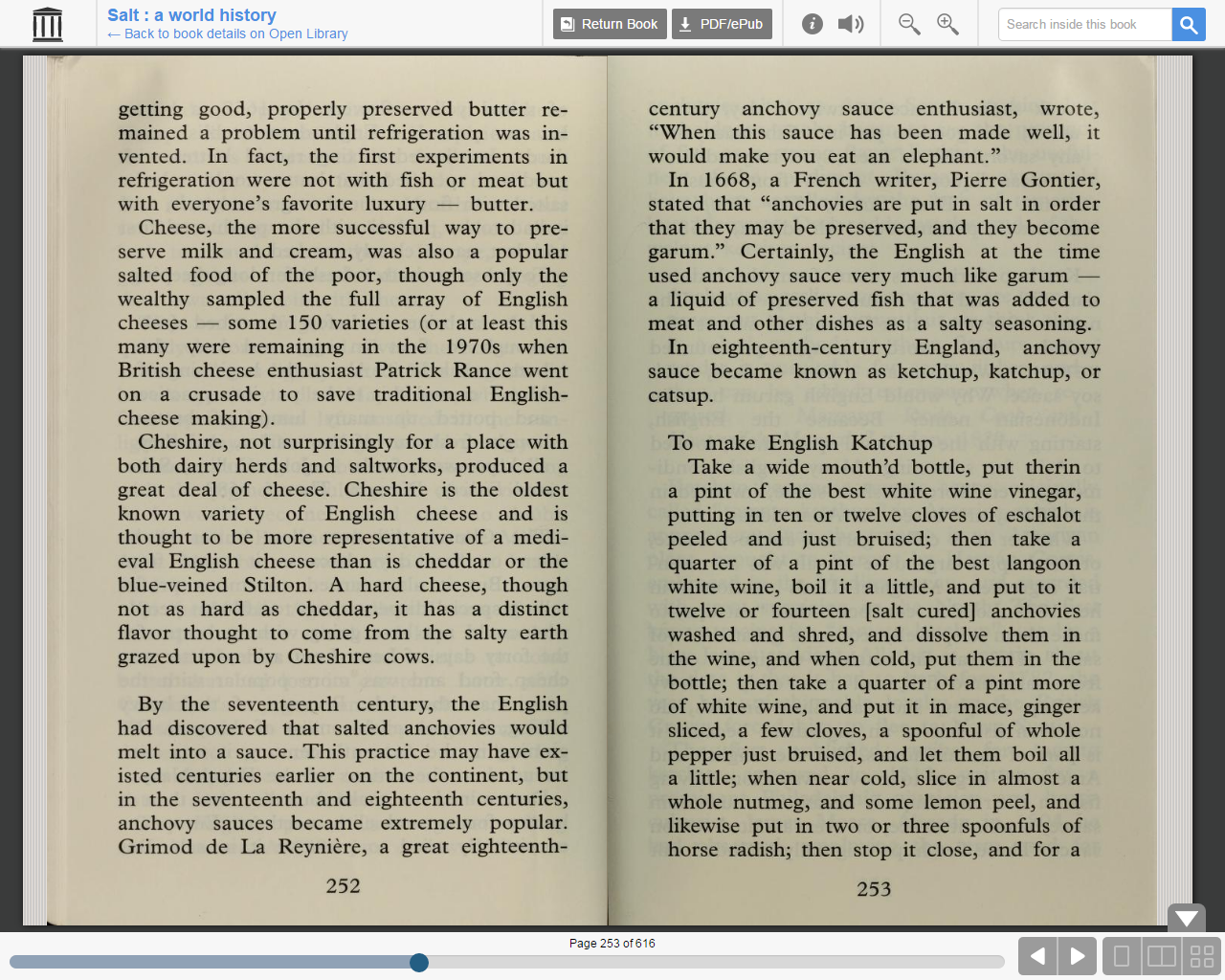
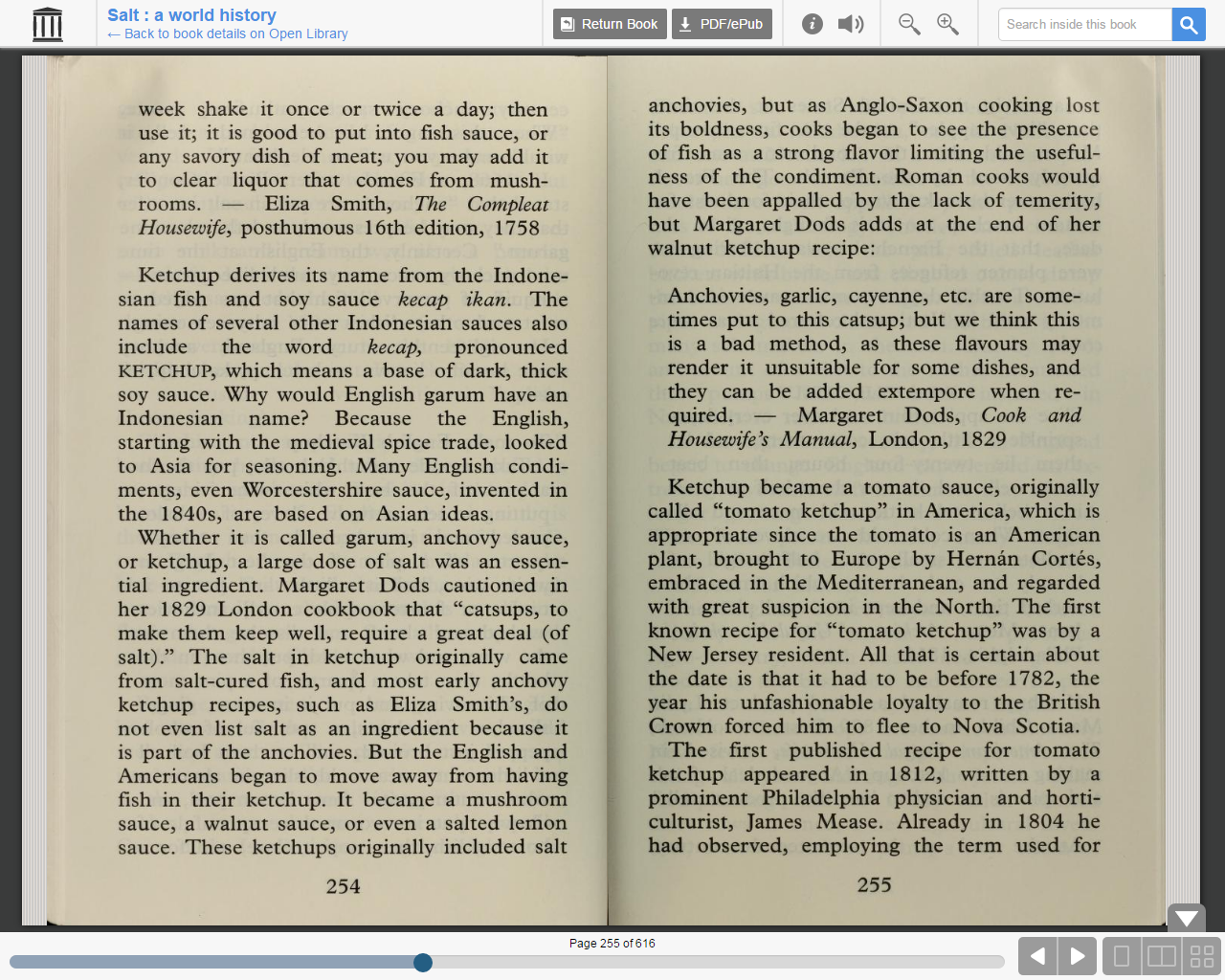
下列資料出自: Mark Kurlansky <<鹽 Salt: A World History>> 臺北,  藍鯨出版社, 2002   openlibrary.org 免費閱讀   


Creole 256頁 是安地列斯群島(包括海地)的白種人後裔

延伸閱讀: Smith, Andrew F. Pure Ketchup: A History of America's National Condiment, Columbia: University of South Carolina Press, 1996

https://zh.wikipedia.org/wiki/辣醬油

https://en.wikipedia.org/wiki/Brown_sauce

香港自學成材人仕


博主補充: 香港乃歷代遺老僑居之地, 訊息來源自有其不同背景, 但因金融運作(投資及投機)建基於各項資訊之獲取, 故資訊產業最為發達. 尤為難得者, 乃下列自學成材但得社會共識共推之公共事務評論人. 


饒宗頤教授,字伯濂,又字選堂,號固庵。1917年生於廣東潮州,自學成家. 2014年,獲頒香港大學建校以來首個「桂冠學人」頭銜,是為該校最高學術榮譽。資料來源: https://www.ourhkfoundation.org.hk/zh-hant/node/1059


劉銳紹(1954年-),生於香港,香港時事評論員,人稱「夫子」. 劉銳紹認為自己是一個愛國者,他承認1967年只得12歲時,有份參與「反英抗暴」香港左派暴動。他的任務是傳遞《毛語錄》,因為當時他不滿殖民地管治, 所以不讀殖民地大學. 資料來源: 

https://zh.wikipedia.org/wiki/劉銳紹


劉夢熊於1948年出生於廣東省台山,及後於1966年在廣州華南師範大學附屬中學畢業。劉夢熊聲稱於1968年11月在上山下鄉運動中到東莞插隊。1973年9月,劉夢熊游水偷渡到殖民地政府治下的英屬香港,並在一間生產不鏽鋼餐具的工廠出任主管一職。1976年4月,劉夢熊開始投身金融界,先後接觸日本期貨、美國期金、九九金、外匯、證券、投資銀行(買殼、賣殼)等經紀業務。資料來源: 

https://zh.wikipedia.org/wiki/劉夢熊


其他自學成材之社會賢達還有: 

沒有讀過書(博主註一)、游水來港的鍾偉平,從未試過隱瞞自己的出身,因為他相信自身的經歷,可鼓勵同樣出身寒微的員工發憤上進,更可以透過承認不足提升自己。鍾偉平資料載自: http://eastweek.my-magazine.me/main/1640

現年五十八歲的鍾偉平,十五歲從家鄉寶安游水來港,翌年在尖沙咀大華飯店廚房工作,開始他的鑊鏟生涯,由炒飯麵的四鑊,做到煮翅煮鮑魚的一鑊。九一年,他得老闆賞識,獲邀與太子爺黃家亮合作開設首間稻香海鮮火鍋酒家。九六年,他首創「一蚊雞」,令稻香從此成名,亦順利度過九七金融風暴。他提出稻香精神:肯搏、肯捱、肯創新,帶領稻香於○七年六月上市。至今,稻香集團有逾六十間分店,以十三個品牌經營,員工逾八千人。

博主註一:  鍾偉平出生於 1960年1月8日, 母親是教師, 上學至 15 歲 (1975年5月12日中午放學後從西鄉游水來香港)

延伸閱讀: 鍾偉平<<思變之執念, 開創稻香王國>>香港:新人才文化, 2014 

                                     https://zh.wikipedia.org/zh-hk/稻香集團


---------------------------------------------------------------------------------------------

稻香鍾偉平:我學毛主席搞革命!


1975年,15歲的稻香集團主席鍾偉平從鄉下偷渡來香港,從入廚房「揸鑊鏟」一直做到上市公司稻香集團主席。小學未畢業,然而就是這位別人眼中沒有文化的「廚房佬」,卻對傳統中式酒樓進行了翻天覆地的改革。
「我讀書少,卻最喜歡看毛主席的書。他的夢想是建設新中國;我的夢想則是革新中式酒樓。毛主席搞革命,我也是在搞革命;前者是流血,後者是流汗。」
「好多人話我叻,其實我只是怕死。我經常聽老行尊講,做酒樓是五年起運,十年玩完。全世界沒有一家規模擴充至30家分店的中式酒樓,可以生存20年。中式酒樓以往靠的是經驗傳承,沒有新知識注入,怎可以持續發展呢?我成日同班同事講,創新未必得,唔創新就實死。」原來,鍾偉平搞革命是被逼上梁山的。
鍾偉平羅列了傳統中式酒樓的積習。「第一個是不標準化。以前很多客人同我講,點解同一集團,間間叉燒包都不同。因為做廚房的都有師傅癮,覺得自己那一套最好,你怎規定份量都沒有用,始終忍不住要加鹽、加醋。」
從2007年稻香創先河設立八達通付費,到現在為止,沒有任何酒樓敢跟隨,鍾偉平慨歎。「經濟環境好時,每100元都有2元貼士,即使環境不好,都有1元貼士。以當年集團每年平均生意額幾十億來計算,每年有幾千萬貼士收入。
用八達通,不單收入少了,還要付八達通的佣金,可謂兩頭蝕。「當時很多人講,老闆你要創新無問題,不過條數誰來孭呢?」
引入現代式管理,標準化、專業化、自動化是中式酒樓的生存之道,然而每一項改革總會觸動既得利益,需要很大的勇氣才能衝破重重阻力。「很多人都知道這些問題,夠膽去改嗎?」
「中式酒樓曾經好像毛澤東成立新中國時那樣一窮二白,不引進新知識與時並進是不行的。」鍾偉平的心願是將稻香發展成「中式麥當勞」,將大眾化中式飲食推廣至全世界。

-------------------------------------------------------------------------------

附錄:  香港半工半讀 - 勤工助的例子  轉載自:

https://skypost.ulifestyle.com.hk/article/1723669/工廠妹變高官謝凌潔貞靠態度

工廠妹變高官 謝凌潔貞靠態度 2013/10/23  作者: 黛安


教育局常任秘書長謝凌潔貞(Cherry)在政府工作近30年,原來加入公務員團隊之前做過好多份工:在製衣廠剪綫頭、於玩具廠測試玩具,仲做過診所護士,真係百足咁多爪!
Cherry日前於馬會「飛躍專才發展計劃」啟動禮上,大談自己的人生經驗。她說自己出身基層,中三已出來幫補家計。到底她是如何爬到今時今日的位置?Cherry話秘訣只有一樣,就是「態度」。她說當年在工廠剪綫頭,老闆帶客人來參觀,對方一句:「無綫頭,好企理。」令她深明細節的重要。而在玩具廠時,她負責測試玩具發聲,工作環境好嘈,黛安諗起都覺得煩。你估她怎樣?居然想到一邊唱歌一邊工作,EQ認真高!Cherry話每份工都有辛苦的地方,最緊要識得解難。
借《胡雪巖》勉勵學員
好多90後學員聽見Cherry分享,都好有共鳴。有人問她有無好書分享,Cherry即推介高陽的名著《胡雪巖》,又借書中名句:「前半夜想自己、後半夜想別人」,勉勵學生凡事要懂得為人設想,才可建立長遠關係。
延伸閱讀:  https://zh.wikipedia.org/wiki/謝凌潔貞

2017年12月2日 星期六

油莎豆助力新疆产业发展与精准扶贫


小小豆子也有大作为    2017-08-31 天山网原创  
轉載自经济新闻   http://news.ts.cn/content/2017-08/31/content_12808190.htm


8月31日,新疆油莎豆产业精准扶贫研讨会在乌鲁木齐市召开。

天山网讯(记者赵敏摄影报道)8月31日,新疆油莎豆产业精准扶贫研讨会在乌鲁木齐市召开。会议旨在以油莎豆全产业链带动新疆精准扶贫、沙漠化治理,推进农牧业现代化、环保科学化,走生态可循环之路,促进区域经济快速发展。
  “目前,新疆油莎豆种植面积已达一万亩,主要分布在南疆地区。”欧博美油莎豆产业发展股份有限公司创始人王焕义介绍说,油莎豆不仅是单一的农产品,在延伸产业链方面,还开发了专用食用油、油莎豆饮料、酒水、油莎豆风味食品等。
  “目前,自治区党委宣传部‘访惠聚’驻村工作队也正积极将油莎豆产业引入新疆皮山县,今后我们希望在新疆扩大种植规模,预计在2018年种植规模达到10万亩,5年内达到100万亩,助力新疆产业扶贫。”王焕义说。
  新疆生产建设兵团第三师五十四团副团长李万正说:“油莎豆非常适合新疆的土壤环境,目前,兵团第三师五十四团已种植了7000亩油莎豆,是新疆油莎豆种植面积最大的区域,种植油莎豆以后,团场周边的环境有了明显的改善,风沙也没有以往那么大了。”
  “若能实现大规模集约化种植,科学化管理并配套成熟加工技术,形成全产业链产业结构,不仅对土壤及环境有改良作用,还将增加农民经济收入。”李万正说。
  中国农科院油料研究所副研究员赵永国说,油莎豆主要作用于油、粮、饲料、食品、医药、生物柴油、生物润滑油与沼气、盐碱地改良、沙漠治理等行业的原料与材料,大规模种植油莎豆对保护新疆耕地、治理沙化、改良土壤、援疆扶贫等具有重要的意义。
  据介绍,油莎豆又名“虎坚果 tigernut”,原产非洲,被誉为“地下核桃”,喜光耐旱、抗盐碱。种植不占耕地,可在沙地、荒地、盐碱地种植,可在果园、林地 套种,也可与马铃薯、小麦等作物轮种,亩产远高于大豆、油菜籽、花生等油料作物,是一种优质、高产、综合利用价值极高的油、粮多用新型作物,被誉为“油料 作物之王”。

延伸閱讀:   种1亩油莎豆相当于7~10亩油菜 http://www.oubomei.com/news_detail/newsId=22.html

 https://zh.wikipedia.org/wiki/油莎草

------------------------------------------------------------------------------------------------

油莎豆:前景广阔的油料作物(组图)

2011-11-18  来源: 荆楚网-湖北日报(武汉)  轉載自: http://news.163.com/11/1118/07/7J4J1FRI00014AED.html


湖北日报讯 图为:欧博美公司负责人与中国工程院院士傅廷栋探讨油莎豆产业前景

一方面是食用油消费量日益高涨,一方面是产业对外依存度高,油瓶子被外国人拿捏着。尽管我省是油料大省,油菜种植面积、总产量多年居全国第一,但并没有改 变食用油不能自给的窘境,更遑论发展与粮争地的生物油产业。随着油莎豆机械化收获瓶颈的突破,油莎豆产业化之路柳暗花明,为油料大省的新发展带来新机遇。

  油料大省的新希望

  省农业厅厅长 祝金水

  我们在这里隆重举行油莎豆产业化研究与开发项目成果及产品推介会。首先,我代表省农业厅对“油莎豆产业化研究与开发项目”取得的丰硕成果和湖北欧博美公司生产的油莎豆系列产品被授予“湖北优质农产品”称号表示热烈祝贺!

  我国是一个食用油紧缺国家,长期依赖国外进口,对外依存度在60%以上。2010年,全国食用油籽进口量超过5000万吨,进口食用油700多万吨,创历史新高,若将食用油折算成食用油籽,进口量达到国内产量的1.3倍左右。

  随着国民经济和人民生活水平的快速提高,食用油的消费增长加速,与之相反,国内油料发展缓慢,食用油自给率将会逐年下降,供求紧张的矛盾将会长期存在。

  油莎豆是一种产量很高的油料作物,含油量27%左右,易种好管,耐旱、耐涝、耐瘠薄,适宜于在河滩、荒地、荒山、荒坡种植。一般亩产600多公斤,可产油150至200公斤,相当于2至3亩油菜籽和2亩左右花生的产油量。

  油莎豆食用油脂肪酸组成合理,可与橄榄油媲美,具有降低人体血脂、防治心血管疾病的功能,是一种优质的保健食用油。发展油莎豆对于有效补充国内食用油资源,缓解我国食用油供求不足的矛盾具有重要的战略意义。

  我省是全国油料大省,良好的气候条件适宜各类油料作物生长,丰富的河滩洲地和山岗林地,特别是南水北调工程完工后,将新增150多万亩洲滩 地,发展油莎豆具有得天独厚的资源优势。我省上世纪60年代开始引进种植油莎豆,由于油莎豆易种难收的问题没能得到解决,种植面积较少,发展缓慢。

  湖北欧博美公司迎难而上,自主研制收获设备取得成功,从根本上解决了油莎豆收获难的瓶颈。目前已拥有3000多亩种植基地,形成了油莎豆产业化运作体系,堪称“国内首创、中国第一”。

  我们农业部门要把发展油莎豆作为一个新型的重要产业来抓,加大扶持力度,认真做好规划,合理区域布局,加强基地建设,尽快把这一产业做大做强。

  希望欧博美公司再接再厉,加强技术研究,不断提高油莎豆产量和品质,深度开发油莎豆的系列产品,发挥品牌优势,不断开辟市场营销渠道,为巩固我省油料大省地位,促进我省现代农业发展和农民增收作出新的贡献。

  种一亩油莎豆等于种3亩油菜或2亩花生

  油莎豆,学名油莎草,是1960年从保加利亚引进的一种优质高产油料作物。地下长圆形的根状茎可生食、加工;果实含油率27%左右。目前主要分布在南北各地的沙滩、山坡、丘陵、林间。

  油莎豆叶子针形细而长,株高1米左右,生长旺盛,分蘖力强,地下结实。果实椭圆形,含有丰富的蛋白质和氨基酸,出油率一般为25%左右,被冠以“地下核桃”之称。

  生产成本低、产量高,投资产出比为1:8.3。经北京、河北、湖南、山东、四川等地试种,一般亩产750至1000公斤,在瘠薄土地种植,也 可产300至500公斤。种一亩油莎豆,等于种3亩油菜,2亩左右的花生,每亩可榨出品质优良、可降低血脂、防止心血管疾病的上等食用保健油150至 200公斤,产饼粕400至700公斤。

  不仅产量高,价格也高,综合算账,效益高出一大截。我国的油莎豆种子市场价格多为30至50元/公斤,果实为10至20元/公斤,除去各种成 本,农民每亩纯收入1500至1700元;国内的油莎豆大部分内销,一部分出口到东南亚各国;其果实多用于制作生物能源、食用油及休闲食品,叶多用于生产 饲料。目前,油莎豆作为生物柴油的优质农作物原料之一,受到越来越多的关注。

  油莎豆还具有生产期短、播种期长的特点,可错开农忙季节,巧用农闲劳力。油莎豆作为油料植物时,一年生栽培,全生长期仅135天,能大田播种,也可在果园、林地套种、间种、轮作,是安排年度种植计划和调剂茬口的优良油料植物品种。

  食用油品质高 媲美橄榄油

  油莎豆油品质优于菜籽油,堪比橄榄油,营养价值极高。油色清澈微红,无沉淀,浓香无异味,0℃以下不冻,可作精美菜肴的调料油,符合国家食用油标准,是当今植物中较有发展前途的新型油料作物之一。

  油莎豆含有丰富的蛋白质和亚油酸,其中蛋白质8-10%,亚麻油酸20%左右,亚油酸29%,总油酸高达90%以上。

  近几十年来,反式脂肪(人造氢化油)广泛被应用在与民众息息相关的面包、蛋糕、饼干等食品上,人们渐渐发现反式脂肪给身心带来的极大危害:高 血压、高血脂、高血糖等疾病的大量出现。禁止反式脂肪(人造氢化油)在食品上应用的呼声越来越强烈,美国政府已明文规定禁止使用和限量使用在食品上。当前 找到一种能替代人造氢化油的现实问题已经摆在了我们面前。

  油莎豆富含的油脂,大部分为油酸、亚油酸,并含有大量VE、Vc,不含胆固醇,极具抗氧化性,是优质的不干性食用油,适宜所有人群食用,而且可用于高温油炸食品,是反式脂肪(人选氢化油)唯一的优质替代品,应用在食品上,将还人民大众一个健康身体。

  充分利用荒地、沙地 综合效益高

  油莎豆备受关注的原因主要是全球石油危机。由石油危机带来的整个能源危机日益加深。各国科学家都在寻找新的可替代能源,美国主要用大豆油生产 柴油,欧洲国家主要用菜籽油生产柴油。我国有13亿人口,农业相对薄弱,所以,中国解决能源危机绝不能像欧美国家那样,与农民争夺粮食资源。

  目前生物柴油制备成本的75%是原料成本,生物柴油的原料成本高己成为当前制约我国生物柴油产业化的瓶颈。采用廉价原料降低成本是生物柴油能否实用化的关键。

  除油莎豆外,我国生产生物柴油的原料还有许多能源树,如麻疯树、元枫果、黄连木、乌桕、文冠果等等,它们的果实都是生产生物柴油的理想原料。 油莎豆和这些生物能源树比较,其共性是:适应性广,再生力和抗逆性强,具有较强的耐寒冷、耐瘠薄、耐盐碱、耐旱涝、易种好管,能有效的利用荒漠化土地;果 实产油率相近。其特性是:生物能源树从栽培到进入盛果期需6年,而油莎豆则是春(夏)种秋收,周期短,见效快。因此,它成为生物柴油原料的首选。

  油莎豆对土壤要求非常低,可充分利用河滩、废弃荒地等广泛种植。不与大田作物争良田,可有效缓解我国乃至世界土地资源日趋减少的资源危机,还能达到改良土壤,降低盐碱,固沙、防风、防止水土流失的作用,保持生态植被,调节改善局域气候。

  湖北省长江和江汉及支流沿岸的冲积平原,河流阶地及滨湖地区有可利用的滩涂地600多万亩,随着三峡和丹江口水库蓄水能力提高,滩涂地可用面 积还将明显增加。分布在红安、广水、麻城、罗田等地的砂质山地有200多万亩。利用上述两种荒地、荒滩地的20%,每亩只按产油100公斤计算,每年可提 供22万吨的油莎豆油料。

  突破技术瓶颈 省时省工

  油莎豆易种好管,但收割极其困难,这是制约规模化、产业化发展的关键因素。油莎豆块茎较少,千粒重在260至650克左右,播种(点播)一亩 需要用工3人,而收割一亩则需用工30个,按每工30元计算,其开支几乎占每亩生产成本的70%以上,大面积种植成本问题更为突出。


  实现油莎豆大面积种植、规模生产,必须突破播种、收获机械化瓶颈。由于机械化收割没有实质性的进展,使我国油莎豆产业徘徊40多年。谁能突破,谁就可以主宰控制油莎豆大规模发展的主动权。

  2010年,湖北欧博美生态食品有限公司自主研发制造了国内唯一的机械化收获机,并通过了1200亩的实地机收成功,实现了机械化收割的宏大目标。2011年,公司攻克了油莎豆植物蛋白饮料、油莎豆植物油的深加工技术难关,形成生产流水示范线。

  遵循“科技引导、充分发展、综合利用、注重效益”的原则,奥博美公司通过油莎豆的种植、加工产业化,构架农、工、畜牧、新能源循环经济的互相发展,形成一个开环式的全程产业链,实现城乡、农工一体化发展的格局。